We spend a huge portion of our lives at work. Whether you are sitting at a desk in a high-rise building, operating heavy machinery in a warehouse, or serving coffee in a busy cafe, the workplace is your second home. Because we spend so much time there, it is easy to get comfortable. We stop noticing the loose cable on the floor. We forget to put on our safety glasses for a “quick” five-minute job. We lift a heavy box the wrong way because we are in a rush. This comfort is dangerous. Accidents happen when we stop paying attention, and in the workplace, an accident can change a life forever.
Workplace safety is not just about following rules or avoiding fines from government inspectors. It is about people. It is about making sure that every single person who walks through the door in the morning walks out of it in the evening, safe and sound, to go home to their families. In 2026, safety has evolved. It is no longer just about hard hats and steel-toed boots; it is about mental health, ergonomic setups for remote workers, and creating a culture where everyone looks out for each other. This guide is going to walk you through the essential pillars of workplace safety. We will use simple, plain English to explain practical steps that any business, big or small, can take to create a safer, happier, and more productive environment.
Why Workplace Safety Culture Starts from the Top Down
The most important safety tool isn’t a fire extinguisher or a first aid kit. It is the attitude of the people in charge. Safety culture is the invisible vibe in the workplace. In a company with a bad safety culture, employees feel like safety is a burden. They think, “I have to wear this helmet so I don’t get yelled at.” In a company with a good safety culture, employees think, “I wear this helmet because I value my brain.” This shift in thinking has to start with the managers and the owners.
If a manager walks through the factory floor without safety glasses, every employee sees that. It sends a silent message that the rules don’t really matter. On the other hand, if the boss is the first one to put on their gear, the first one to clean up a spill, and the first one to pause work when something looks dangerous, the team will follow. Safety cannot be a “do as I say, not as I do” situation. It requires leadership. Management needs to make it clear that speed and profit are important, but they are never more important than safety. If a job cannot be done safely, it should not be done at all. When employees know that their boss will back them up for stopping unsafe work, they feel empowered to protect themselves and their coworkers. This builds trust, and trust is the foundation of a safe workplace.
Identifying and Eliminating Common Trip and Fall Hazards
Slips, trips, and falls are the most common cause of injury in almost every industry. It doesn’t matter if you work in a library or a lumber yard; gravity is always there. These accidents sound minor—a stumble here, a slide there—but they result in broken bones, concussions, and months of lost work time. The tragic part is that almost all of them are preventable with a little bit of housekeeping.
Look at your floor right now. What do you see? Are there cables snake across the walkway? Is there a rug that curls up at the corner? Is there a wet spot near the water cooler that hasn’t been dried? These are traps waiting to happen. The golden rule of floor safety is “Clean as you go.” If you spill coffee, wipe it up immediately. Do not wait for the cleaning crew. If you open a box, break it down and move it out of the aisle. Do not leave it there “for just a second.”
Lighting is also a huge factor. You cannot avoid a hazard if you cannot see it. Stairwells, parking lots, and storage rooms need to be brightly lit. If a bulb burns out, it should be treated as an emergency and replaced immediately. In areas where floors are often wet, like kitchens or entryways during winter, use non-slip mats. These mats provide grip and give people a safe path to walk. Finally, encourage employees to wear appropriate footwear. Flip-flops might be comfortable, but they are a disaster in a warehouse. Shoes with good traction are the tires of the human body; they keep you on the road.
The Importance of Personal Protective Equipment (PPE)
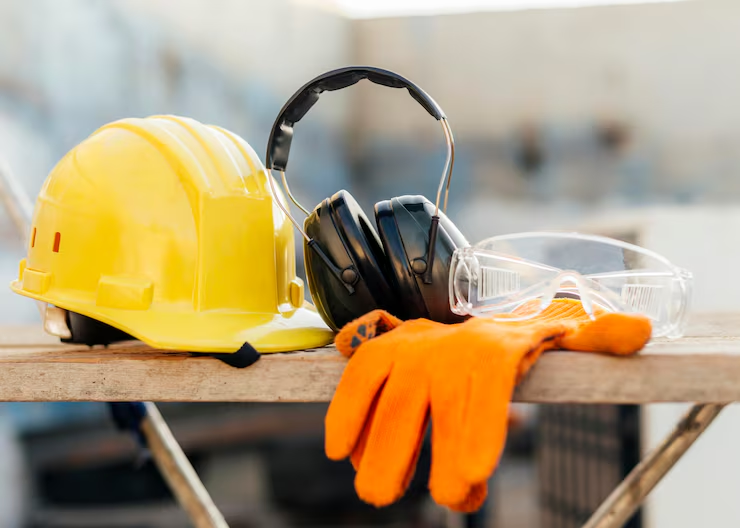
Personal Protective Equipment, or PPE, is the last line of defense. It is the shield that stands between you and danger. Depending on your job, this could be safety glasses, earplugs, high-visibility vests, gloves, or respirators. The problem with PPE is that it can be uncomfortable. Glasses fog up. Helmets get hot. Gloves make it hard to type or pick up small screws. Because of this, people are always tempted to take it off.
The key to getting people to wear PPE is to make sure it fits and that they understand why they need it. Don’t just hand someone a pair of generic gloves and say “wear these.” If the gloves are too big, they might get caught in machinery. If they are too small, they will cut off circulation. Invest in high-quality gear that is adjustable and comfortable. When gear fits well, people forget they are wearing it.
Training is crucial here. Show your team exactly what happens when they don’t wear the gear. Show them how a tiny shard of metal can destroy an eye in a millisecond without safety glasses. Explain that hearing loss from loud machinery isn’t painful; it is silent and permanent. Once your hearing is gone, it never comes back. When employees understand the specific risks they are facing, they stop viewing PPE as a uniform and start viewing it as armor. It becomes a tool that allows them to do their job without sacrificing their health.
Fire Safety Essentials: Alarms, Exits, and Extinguishers
Fire is one of the most terrifying risks in any building. It spreads fast, it is unpredictable, and the smoke can be just as deadly as the flames. Every workplace needs a robust fire safety plan, and every single person needs to know it by heart. When the alarm rings, there should be no confusion. No one should be asking, “Is this a drill?” or “Where do I go?”
First, look at your exits. Exit signs must be lit up and visible from anywhere in the room. But more importantly, the path to the exit must be clear. It is very common for people to store boxes, old chairs, or cleaning carts in front of emergency doors because “we never use that door.” This is illegal and dangerous. In a fire, the room will be dark and full of smoke. People will be panicking. If they run to an exit and find it blocked by a stack of pallets, they are trapped. Keep the exits clear at all times.
Extinguishers are vital, but only if people know how to use them. A fire extinguisher is not a magic wand. It has a specific technique (PASS: Pull, Aim, Squeeze, Sweep). Every employee should have hands-on training with an extinguisher. They need to feel how heavy it is and see how short the spray lasts (usually only 10 to 20 seconds). They also need to know when not to fight a fire. If the fire is bigger than a trash can, or if the smoke is getting thick, the only correct action is to get out. Property can be replaced; people cannot.
Ergonomics and Preventing Repetitive Strain Injuries
When we think of workplace injuries, we usually think of sudden events like falls or cuts. But there is a silent injury that hurts millions of office workers every year: Repetitive Strain Injury (RSI). This comes from doing the same small motion thousands of times a day, like typing, clicking a mouse, or staring at a screen. Bad ergonomics can lead to carpal tunnel syndrome, chronic back pain, and permanent neck issues.
Ergonomics is simply the science of fitting the work to the worker. It starts with the chair. You should be able to sit with your feet flat on the floor and your knees at a 90-degree angle. If your legs are dangling, you need a footrest. Your lower back needs support to maintain its natural curve. If your chair is old and flat, get a lumbar pillow.
Next, look at the monitor. The top of your computer screen should be at or slightly below eye level. If you have to look down to see your screen, you are putting massive strain on your neck (this is called “Tech Neck”). Lift your monitor up with a stand or a stack of books. Finally, take breaks. The human body was not designed to sit in a rigid pose for eight hours. We are built to move. Use the “20-20-20 Rule”: every 20 minutes, look at something 20 feet away for 20 seconds. Stand up and stretch every hour. These micro-breaks allow blood to flow back into your muscles and prevent the stiffness that leads to chronic pain.
Safe Handling and Storage of Hazardous Chemicals
Many workplaces use chemicals, from simple cleaning supplies like bleach to industrial solvents and paints. If handled incorrectly, these substances can cause burns, respiratory problems, or even explosions. The most dangerous chemical is the one you don’t know about. This is why labeling is the law.
Every bottle, bucket, and jar in the workplace must have a label. You should never find a clear liquid in an unmarked water bottle sitting on a shelf. Is it water? Is it vinegar? Is it acid? No one knows until it is too late. Labels must clearly state what the chemical is and what the hazards are (e.g., “Flammable,” “Corrosive”).
You also need to have Safety Data Sheets (SDS) readily available. These are documents that come with every chemical. They tell you exactly what to do if you spill it on your skin or if you accidentally inhale it. These sheets shouldn’t be locked in a manager’s office; they should be in a binder that everyone can access. Storage matters too. You cannot just throw all chemicals in the same cupboard. Some chemicals react violently when mixed. For example, bleach and ammonia create a deadly gas. Flammable liquids need to be stored in metal, fire-resistant cabinets away from heat sources. Respect the chemistry, and it will be a useful tool. Disrespect it, and it becomes a bomb.
Heavy Lifting Techniques to Protect Your Back
Back injuries are the number one reason people miss work. Once you hurt your back, it is an injury that stays with you for life. It can flare up years later when you are just trying to pick up your kids or tie your shoes. Most back injuries happen because we try to be heroes. We try to carry too much at once to save a trip.
The basics of lifting are simple but often ignored. Never bend at the waist to pick something up. This turns your spine into a crane, putting hundreds of pounds of pressure on your lower discs. Instead, squat down. Bend your knees and keep your back straight. Hold the object close to your chest, like a hug. The closer the weight is to your body, the less strain it puts on your spine. Lift with your legs, which are the strongest muscles in your body.
Crucially, never twist your body while holding a heavy load. If you need to turn, move your feet. Pivot your whole body. Twisting while lifting is the fastest way to tear a disc. And most importantly, know your limit. If an object looks heavy, test it by lifting a corner. If it is too heavy, ask for help. Asking for a teammate to help you lift a box is not a sign of weakness; it is a sign of intelligence. Use mechanical aids whenever possible. Why carry a box when you can put it on a dolly or a cart? Work smarter, not harder.
Addressing Mental Health and Workplace Stress
In 2026, we finally understand that safety isn’t just physical. A worker who is stressed, burnt out, or distracted is an unsafe worker. If your mind is racing with anxiety or you are exhausted from overwork, your reaction times slow down. You make mistakes. You forget to check the safety guard. Mental health is safety.
Workplaces need to create an environment where it is okay to not be okay. High-pressure deadlines and toxic management styles are safety hazards just as real as a wet floor. Managers need to check in on their teams. Look for signs of burnout: irritability, missed deadlines, or withdrawal. Encourage people to take their vacation time. A rested brain is a safe brain.
We also need to talk about harassment and bullying. A workplace where people are afraid of their coworkers is a hostile environment. Zero tolerance for bullying is essential. Employees need to feel psychologically safe. They need to know that they can come to work without fear of being yelled at or belittled. Providing access to mental health resources, like counseling services or stress management workshops, shows the team that the company cares about the whole person, not just their output.
The Critical Role of Emergency Drills and First Aid Training
You cannot learn safety in the middle of an emergency. When adrenaline kicks in, your brain stops thinking logically and reverts to habit. If you have never practiced what to do, you will likely freeze or panic. This is why drills are non-negotiable.
Fire drills, severe weather drills, and even active shooter drills need to be practiced regularly. They shouldn’t be seen as annoying interruptions; they should be seen as rehearsals for survival. During a drill, treat it like the real thing. Don’t grab your coffee and slowly walk out chatting. Move with purpose. Afterward, debrief. What went wrong? Did a door stick? Did someone not hear the alarm? Fix these issues now, before they matter.
First aid training is equally important. You don’t need to be a doctor, but every workplace should have a few people who know CPR and the Heimlich maneuver. Accidents happen fast. An ambulance might be ten minutes away, but a brain without oxygen dies in four minutes. Having a colleague who knows how to do chest compressions or how to use an AED (Automated External Defibrillator) can save a life in that critical gap. Keep first aid kits stocked. A box of empty band-aid wrappers is useless. Check the dates on items and refill them as soon as they are used.
Creating an Open System for Reporting Hazards
The eyes and ears of the workplace are the employees. They know where the loose railing is. They know which machine makes a weird noise when it starts up. They know which ladder is wobbly. But they will only tell you about these things if they feel safe doing so.
In many companies, people are afraid to report hazards because they don’t want to be seen as “complainers” or “snitches.” They worry that if they report an injury, they will lose their safety bonus or get in trouble. This silence is deadly. You must create a reporting system that is easy and, if necessary, anonymous.
Celebrate the reports. If someone reports a hazard, thank them publicly. Say, “Thanks to Sarah for noticing that leak, we fixed it before anyone slipped.” This flips the script. It makes safety reporting a positive act of looking out for the team. Implement a “Near Miss” reporting system. A near miss is an accident that almost happened. Maybe a heavy box fell off a shelf but didn’t hit anyone. These are free learning opportunities. Study them. Why did the box fall? Fix the shelf before the next box hits someone. When you treat every near miss as a serious event, you prevent the real accidents from ever happening.
Conclusion: Safety is a Journey, Not a Destination
Workplace safety is not a checklist that you finish once and file away. It is a living, breathing part of your daily work. It changes as your business changes. New machines bring new risks. New employees need new training. It requires constant vigilance and a commitment to never cutting corners.
By focusing on these core areas—from cleaning up spills to supporting mental health—you build a workplace that is resilient. You build a place where people feel valued. When employees feel safe, they work better. They are more loyal, more creative, and more engaged. But the ultimate reward isn’t higher productivity; it is the simple, quiet success of everyone going home to their families at the end of the day, safe and sound. That is the only metric that truly matters. So take a look around your workplace today. What can you improve? What small change can you make to keep your team safe? The best time to start is right now.