We often walk through our daily lives assuming that the buildings we enter, the bridges we cross, and the machines we use are safe. We trust that the elevator will not fall, that the lights will turn on, and that the water from the tap is clean. This trust is not magic. It is the result of hard work, careful planning, and the right tools. Behind every smooth-running factory, every safe construction site, and every reliable office building is a hidden world of maintenance and safety equipment. This equipment is the unsung hero of our economy. It ensures that work gets done without tragedy and that businesses keep running without costly breakdowns.
In 2026, the world of maintenance and safety has evolved. It is no longer just about heavy wrenches and hard hats. It has become a blend of rugged durability and high-tech intelligence. We have tools that can see heat through walls, helmets that can sense if a worker falls, and locks that save lives with a simple key. For business owners, managers, and workers, understanding this equipment is not just about following the law; it is about protecting your most valuable asset—your people. This guide will walk you through the essential gear that keeps the modern world safe and operational. We will strip away the complex jargon and use simple, plain English to explain what these tools are, how they work, and why they are absolutely critical for success.
Why Maintenance and Safety Go Hand in Hand
Many people think of maintenance and safety as two different departments. They think maintenance is about fixing broken machines, and safety is about following rules. But in reality, they are two sides of the same coin. A well-maintained machine is a safe machine. If you ignore maintenance—if you let oil leak, bolts loosen, or wires fray—you are creating a hazard. A breakdown is not just an inconvenience; it is a potential accident waiting to happen.
Imagine a forklift in a warehouse. If the maintenance team forgets to check the brakes, that forklift becomes a dangerous missile. If they forget to check the hydraulic hoses, a heavy load could drop on someone. Maintenance is the proactive side of safety. By keeping equipment in perfect working order, we prevent the chaotic situations where accidents usually happen. Conversely, safety equipment allows maintenance teams to do their jobs. You cannot fix a high-voltage electrical panel without insulated gloves. You cannot repair a roof without a harness. The two disciplines support each other. Investing in good maintenance tools is investing in safety, and investing in safety gear allows for better, faster maintenance.
Personal Protective Equipment: Your Last Line of Defense
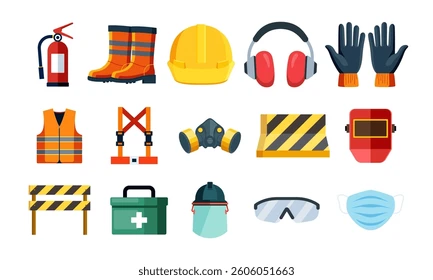
When we talk about safety, the first thing that comes to mind is Personal Protective Equipment, or PPE. This is the gear you wear on your body to create a barrier between you and the danger. It is the helmet on your head, the glasses on your eyes, and the boots on your feet. PPE is often called the “last line of defense” because it is what saves you when everything else goes wrong. If a tool falls from a scaffold, you cannot stop gravity, but a hard hat can save your life.
In 2026, PPE has become incredibly comfortable and smart. Gone are the days of heavy, itchy gear that workers hated wearing. Modern safety glasses look like stylish sunglasses but are made of shatterproof polycarbonate that can stop a flying nail. Safety boots are made with composite materials like carbon fiber instead of heavy steel, making them light enough to wear all day without fatigue. We even have “Smart PPE.” Imagine a vest with sensors that monitor a worker’s heart rate and body temperature. If a construction worker starts to overheat in the summer sun, the vest sends an alert to their phone and their supervisor, telling them to take a break before they suffer heatstroke. This blend of comfort and technology ensures that workers actually want to wear their gear, which is the most important factor in keeping them safe.
Lockout and Tagout Devices: Preventing Surprise Accidents
One of the most dangerous times in any factory is when a machine is being fixed. Imagine a mechanic climbs inside a giant mixing machine to clean the blades. He thinks the machine is off. But then, another worker walks by, sees the machine is off, and thinks, “Oh, I need to use this.” He presses the start button. The result is a tragedy. This scenario happens more often than you think, and it is why we use Lockout/Tagout (LOTO) equipment.
Lockout/Tagout is a simple but life-saving procedure. It involves physical locks and bright red tags. When the mechanic goes to fix the machine, he goes to the main power switch. He turns it off. Then, he puts a special padlock through the switch so it physically cannot be turned back on. He keeps the only key in his pocket. He also hangs a tag on the lock that says, “DANGER: Do Not Operate. John is working on this.”
This equipment is simple—padlocks, hasps, and tags—but it is non-negotiable. It creates a physical barrier that prevents human error. Even if someone tries to turn the machine on, the lock stops them. It gives the maintenance worker 100% control over their own safety. They know for a fact that the machine cannot start until they are finished, they climb out, and they unlock it themselves. Every workplace with heavy machinery must have a LOTO kit and strict training on how to use it.
Fall Protection Gear: Working at Heights Safely
Gravity is a constant threat. Falls are one of the leading causes of workplace fatalities, especially in construction, roofing, and warehousing. Whether you are working on a skyscraper or just changing a lightbulb in a warehouse ceiling, you need fall protection equipment. This gear is designed to catch you if you slip.
The core of this system is the Full Body Harness. This is a series of straps that go around your legs, chest, and shoulders. It distributes the force of a fall across your strong bones (hips and thighs) rather than your neck or stomach. In 2026, harnesses are padded and ergonomic, designed to be worn all day without chafing.
Connecting the harness to the building is the Lanyard or Retractable Lifeline. A retractable lifeline looks like a giant seatbelt tape measure. It sits in a box anchored above you. As you walk around, the line pulls out and retracts so it is always tight. If you stumble and fall, the mechanism locks instantly—just like a car seatbelt—stopping you within inches. This prevents you from hitting the ground. We also use guardrails, safety nets, and anchor points. Fall protection requires serious training because if you wear the harness too loosely or anchor it to something weak, it won’t work. But when used correctly, it turns a deadly fall into a scary but survivable incident.
Predictive Maintenance Tools: Fixing Machines Before They Break
For a long time, maintenance was “reactive.” You waited for a machine to break, smoke to pour out, or a belt to snap, and then you scrambled to fix it. This is expensive and stressful. Today, we have entered the era of “Predictive Maintenance.” This uses smart tools to check the health of a machine while it is still running, allowing us to fix problems before they cause a breakdown.
One of the most powerful tools is the Thermal Camera. Electronic parts and motors get hot before they fail. A loose wire in a fuse box creates resistance, which creates heat. A human eye can’t see this, but a thermal camera sees it as a glowing red or white spot on a screen. A maintenance tech can scan a whole room of electrical panels in five minutes and instantly see the one fuse that is about to burn out.
Another tool is the Vibration Sensor. Every rotating machine—like a fan, pump, or motor—has a specific vibration. When a bearing starts to wear out or a shaft gets misaligned, that vibration changes slightly. We now have tiny magnetic sensors that stick to the side of a motor. They send data to a smartphone app. If the vibration gets “wobbly,” the app alerts the mechanic: “Pump #4 needs a new bearing soon.” This allows the team to schedule the repair during a lunch break, rather than having the pump explode in the middle of a busy shift.
Spill Containment and Environmental Safety
Factories and workshops are full of liquids: oil, coolant, chemicals, and fuel. If these leak, they create two big problems. First, they create a slip hazard. A puddle of oil on a concrete floor is as slippery as ice. Second, they can damage the environment if they seep into drains or soil. Spill containment equipment is the insurance policy against these leaks.
The most common tool is the Spill Kit. This is a bright yellow bin or bag filled with absorbent materials. It usually contains “socks” (long absorbent tubes to surround a spill), pads (to soak up the liquid), and disposal bags. Every area with liquids needs a spill kit nearby. If a forklift punctures a drum of oil, workers can grab the kit, throw down the socks to stop the oil from spreading, and use the pads to clean it up in minutes.
For long-term storage, we use Spill Pallets. These look like normal plastic pallets, but they have a hollow basin underneath the grid. You put your 55-gallon drums of chemicals on top. If a drum rusts and leaks, the chemical drips into the basin instead of onto the floor. This keeps the floor dry and safe. We also use drain covers—heavy rubber mats that you slap over a floor drain instantly to stop a chemical spill from getting into the city sewer system. Protecting the environment is a huge part of modern safety compliance.
Respiratory Protection: Breathing Clean Air
Not all hazards are visible. In many industries, the air itself can be dangerous. Dust from sanding wood, fumes from welding, or vapors from painting can damage your lungs permanently. This is why Respiratory Protection is vital. It ranges from simple disposable masks to complex air-supplied suits.
The basic N95 mask (or respirator) filters out dust and particles. It is light and cheap. However, for chemicals and gases, you need a Half-Face or Full-Face Respirator. These are rubber masks that seal tight against your face. They have replaceable cartridges on the sides. You choose the cartridge based on the hazard—one for ammonia, one for paint fumes, one for acid gas.
In 2026, we also see more Powered Air Purifying Respirators (PAPR). These look like a space helmet. A battery-powered fan on your belt sucks in dirty air through a filter and blows clean, cool air into the helmet. They are amazing because they don’t create resistance when you breathe, making them much less tiring to wear for long shifts. They also work even if you have a beard, which breaks the seal on a normal mask. Protecting your lungs is critical because while a cut finger heals, damaged lungs often do not.
Signage and Visual Safety Communication
Sometimes, the best piece of safety equipment is a simple sign. A factory floor can be loud and confusing. Visual communication cuts through the noise to tell people where to walk, what to avoid, and where the safety gear is.
Floor Tape is a major part of this. We use durable, colored tape to mark out “pedestrian lanes” (usually green) and “forklift lanes” (usually yellow). This keeps people and machines separated. If you are walking in the green lane, you know you are safe. We also use tape to mark areas in front of fire extinguishers and electrical panels, ensuring that nobody stacks boxes there.
Safety Signs have also become smarter. In 2026, we use LED projected signs. Instead of painting a “STOP” sign on the floor that gets scuffed and dirty, a projector on the ceiling shines a bright red STOP sign onto the floor. It never fades. Some are even motion-activated; they only turn on when a forklift approaches a blind corner, flashing a warning to pedestrians. Labels are also crucial. Every pipe should be labeled with what is inside (Gas, Water, Air) and which way it is flowing. If a maintenance worker knows exactly what is in a pipe, they won’t accidentally cut open a steam line thinking it is water.
The Role of Training and Culture in Safety
You can buy the most expensive helmet, the best vibration sensor, and the strongest lock, but if your team doesn’t use them, they are useless. Equipment is only 50% of the safety equation. The other 50% is training and culture.
Training must be hands-on. You cannot just show someone a PowerPoint slide about a fire extinguisher; let them hold it. Let them pull the pin. Let them try on the harness and adjust the straps. When people handle the equipment, they lose their fear of it and learn how to use it correctly. Regular drills are essential. Practice what to do if a chemical spills. Practice what to do if someone falls. Muscle memory saves lives when panic sets in.
Culture is the vibe of the workplace. In a good safety culture, looking out for each other is cool. If a worker sees their buddy working without safety glasses, they say, “Hey, put your glasses on,” and the buddy says, “Thanks,” instead of getting angry. Management leads this culture. If the boss wears his hard hat every single time he walks on the floor, the employees will too. If the boss ignores the rules, everyone else will too. The best equipment in the world supports a culture of safety, but it cannot replace it.
Conclusion: Safety is an Investment, Not a Cost
It is easy to look at the price tag of a high-tech thermal camera or a pallet of spill kits and think, “That is a lot of money.” Some businesses try to save money by buying cheap gear or skipping maintenance. This is a false economy. The cost of one accident—in medical bills, lawsuits, lost productivity, and government fines—is vastly higher than the cost of the equipment that would have prevented it.
Maintenance and safety equipment is an investment. It buys you uptime. It buys you efficiency. It buys you the loyalty of your workers, who know that you care enough to protect them. In 2026, with the incredible tools available to us, there is no excuse for an unsafe workplace. Whether it is a smart vest that prevents heatstroke or a simple padlock that prevents an electrocution, these tools are the foundation of a successful, modern business. When you give people the right tools, they can build amazing things, and most importantly, they can go home to their families at the end of the day safe and sound. That is the true value of safety.