When you look at the smartphone in your hand, the car in your driveway, or even the medical tools in a doctor’s office, you are looking at the work of CNC & precision machines. Most people have never seen one of these machines in person, but they are the hidden heroes of modern life. CNC stands for “Computer Numerical Control.” In simple English, it means using a computer to tell a machine exactly how to move and cut material. This technology has changed everything because it allows us to make parts that are so accurate that they are perfect down to a fraction of a human hair. In this guide, we are going to explore the world of CNC & precision machines in a friendly, human tone. We will explain how they work, why they matter, and how they are used to build the future. Whether you are a student, a curious hobbyist, or someone looking to start a career in manufacturing, understanding CNC & precision machines is like getting a backstage pass to how the world is made.
What Exactly are CNC & Precision Machines and Why Do They Matter
Imagine you are trying to cut a perfect circle out of a piece of metal using a hand saw. No matter how careful you are, there will be tiny bumps and mistakes. Now imagine a machine that uses a computer brain to guide a sharp cutting tool with 100% accuracy every single time. That is the power of CNC & precision machines. These machines take a digital 3D design and turn it into a physical object by carving away material like wood, plastic, or metal. They matter because they allow for “mass production” with “perfect quality.” Without CNC & precision machines, every car engine would be slightly different, and parts wouldn’t fit together. By using CNC & precision machines, we ensure that every part is a twin of the one before it, which makes everything from airplanes to kitchen blenders safer and more reliable.
The Different Types of CNC & Precision Machines You Should Know
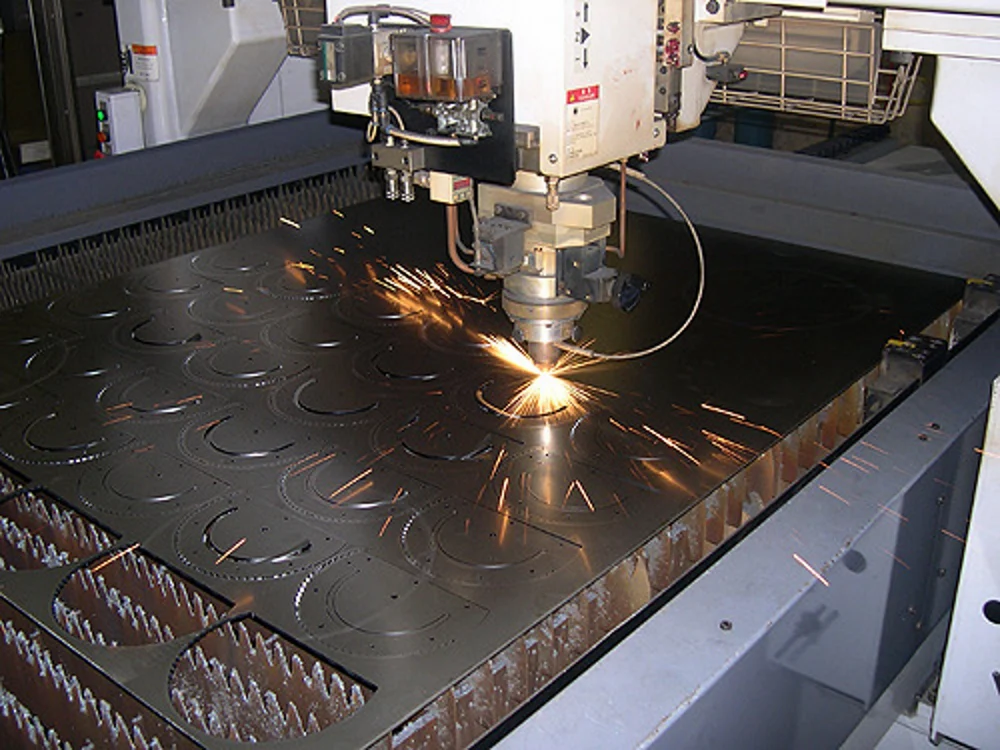
The world of CNC & precision machines is very large, and there are different tools for different jobs. The most common one is the CNC Mill. Think of a mill like a high-tech drill that can move in every direction to carve out complex shapes. Then there is the CNC Lathe, which spins the material very fast while a sharp tool cuts it into a round shape, like a table leg or a car axle. Other advanced CNC & precision machines use lasers, water jets, or even plasma to cut through thick steel like it is butter. In 2026, we also have “5-axis” machines that can flip and turn the part while cutting, allowing for incredibly complex designs that were impossible just a few years ago. Each of these CNC & precision machines has a specific purpose, but they all share the same goal: perfect accuracy.
How the Brain of a CNC Machine Works in Simple English
To understand CNC & precision machines, you have to understand the software. It starts with CAD (Computer-Aided Design), where a designer draws the part on a screen. Then, another program called CAM (Computer-Aided Manufacturing) turns that drawing into a language the machine understands, called G-Code. This code is basically a long list of instructions that tells the CNC & precision machines where to go, how fast to spin, and when to change tools. It is like a very detailed recipe for a cake. When the operator pushes “Start,” the CNC & precision machines follow those instructions perfectly. This connection between the digital world and the physical world is what makes CNC & precision machines so revolutionary. It takes the “human error” out of the cutting process, allowing for 24/7 production without mistakes.
Why Precision is the Key to Modern Manufacturing
When we talk about CNC & precision machines, the word “precision” is the most important part. In the old days, being off by a millimeter was okay. Today, in industries like aerospace or medicine, being off by a thousandth of a millimeter can be a disaster. CNC & precision machines are built to be incredibly stiff and stable so that they don’t vibrate or bend while cutting. They use high-tech sensors and “feedback loops” to check their own position thousands of times per second. This level of detail is what allows us to create tiny heart valves that save lives or jet engine parts that can withstand extreme heat. The “precision” in CNC & precision machines is what gives us the high-tech lifestyle we enjoy today.
The Role of CNC & Precision Machines in the Automotive Industry
Every time you turn the key in your car, you are relying on CNC & precision machines. The engine block, the pistons, the transmission gears, and even the wheels are made using this technology. Because engines have so many moving parts that fit tightly together, the accuracy provided by CNC & precision machines is essential. If a piston is even a tiny bit too big, the engine will seize. If it is too small, it will lose power. By using CNC & precision machines, car companies can build engines that are more fuel-efficient, more powerful, and last much longer than engines made fifty years ago. This technology also allows for the beautiful, sleek designs we see on modern electric vehicles.
Aerospace and the Extreme Accuracy of CNC & Precision Machines
In the world of airplanes and rockets, there is no room for error. This is where CNC & precision machines truly shine. Parts for a jet engine must be able to spin at 10,000 RPM while staying perfectly balanced. The materials used, like titanium or high-strength alloys, are very hard to cut, but CNC & precision machines handle them with ease. Engineers use these machines to create “weight-optimized” parts, which means they carve away every gram of unnecessary metal to make the plane lighter and more efficient. The safety of millions of passengers every day depends on the invisible work of CNC & precision machines in factories all over the world.
How Small Businesses Use CNC & Precision Machines Today
You don’t have to be a giant company like Boeing or Ford to use CNC & precision machines. In 2026, many small “mom and pop” shops have a small CNC machine in their garage or workshop. These machines have become smaller, cheaper, and easier to use. People use them to make custom jewelry, personalized signs, furniture, and even parts for drones. This “desktop revolution” has allowed artists and inventors to bring their ideas to life without needing a million-dollar factory. CNC & precision machines have democratized manufacturing, meaning that if you can dream it and draw it on a computer, you can probably make it.
The Future of CNC & Precision Machines: AI and Automation
The world of CNC & precision machines is moving fast. We are now seeing machines that use Artificial Intelligence (AI) to listen to the cutting sound and adjust themselves to prevent mistakes before they happen. Some CNC & precision machines are even “self-healing,” meaning they can detect a worn-out tool and replace it with a new one using a robotic arm. This level of automation means that a factory can run all night with the lights off—something called “lights-out manufacturing.” As CNC & precision machines become smarter, they will become even more accurate and efficient, leading to cheaper and better products for everyone.
Career Opportunities in CNC & Precision Machines
Because the world will always need things to be made, there is a huge demand for people who know how to run CNC & precision machines. This is a great career path for people who like to work with both their hands and their brains. A CNC Machinist is part programmer, part mechanic, and part artist. They are the ones who set up the CNC & precision machines, choose the right tools, and make sure the final part is perfect. It is a high-tech job that pays well and offers a lot of job security. As long as we are building cars, planes, and medical devices, we will need skilled people to operate CNC & precision machines.
Conclusion: Appreciating the Invisible World of Precision
In conclusion, CNC & precision machines are the silent foundation of our modern world. They are the reason our technology is so small, our cars are so safe, and our medical care is so advanced. We have looked at how these machines use computer brains to guide sharp tools with incredible accuracy. We have explored the different types of machines, from mills to lathes, and how they are used in industries like aerospace and automotive. We also discussed how small businesses are using them to innovate and how AI is shaping the future of the industry.
Next time you hold a piece of technology or see a high-performance machine, take a second to think about the CNC & precision machines that made it possible. It is a fascinating world where math, software, and heavy machinery come together to create perfection. Whether you want to work in this field or just appreciate how things are made, understanding these machines is the key to understanding the modern world.