
Look around you right now. The plastic case on your computer mouse, the aluminum wheels on your car, the golden ring on your finger, and even the chocolate bunny you eat at Easter. What do all of these things have in common? They were all born from a liquid. They started as a hot, flowing soup of material that was poured into a hollow shape and left to freeze. This is the ancient and incredible world of casting and molding. It is one of the oldest technologies in human history, yet it remains the backbone of modern manufacturing. Without it, we wouldn’t have engines, medical devices, or even simple toys.
For most people, the terms “casting” and “molding” sound like industrial jargon. We imagine dirty factories filled with smoke and fire. While that is sometimes true, the concepts behind them are actually very simple. It is just like making ice cubes. You take water (liquid), pour it into a tray (mold), freeze it (solidify), and pop it out. The only difference in the industrial world is that instead of water, we use molten metal or hot plastic, and instead of a freezer, we use cooling systems. In 2026, technology has made these processes faster, cleaner, and more precise than ever before. This guide is going to walk you through the magic of turning liquids into solids. We will strip away the complex engineering terms and use plain English to explain exactly how the objects in your life are shaped.
The Difference Between Casting and Molding Explained
Before we dive into the specific techniques, we need to clear up a common confusion. People often use the words “casting” and “molding” interchangeably, but in the manufacturing world, they usually refer to different materials. It is a distinction that helps engineers know exactly which tools to use.
“Casting” is generally used for metals. When you melt iron, steel, aluminum, or bronze and pour it into a mold, that is casting. Think of a cast-iron skillet or a bronze statue. The process usually involves very high heat and gravity. You pour the heavy liquid in, and it fills the shape.
“Molding,” on the other hand, is generally used for plastics. When you melt plastic pellets and squirt them into a shape, that is molding. Think of a Lego brick or a plastic water bottle. This process often uses high pressure to force the thick, gooey plastic into every tiny corner of the mold. While the physics are similar—liquid becomes solid—the machinery is very different. Casting foundries are hot and gritty; plastic molding factories are often clean and quiet. Understanding this difference is the first step to seeing how the world is made.
Sand Casting: The Ancient Art That Still Power Industry
If you want to make a heavy metal part, like a fire hydrant or an engine block, you use sand. It sounds crazy to use something as fragile as sand to shape molten iron, but sand casting is the most popular casting method in history. It is cheap, it can withstand incredible heat, and it can be reused thousands of times.
The process is like building a sandcastle in reverse. You start with a pattern, which is a replica of the object you want to make (usually made of wood or metal). You pack special sand—which has clay and water mixed in so it sticks together—tightly around this pattern. Then, you carefully remove the pattern. You are left with a hollow space in the sand that is the exact shape of your object.
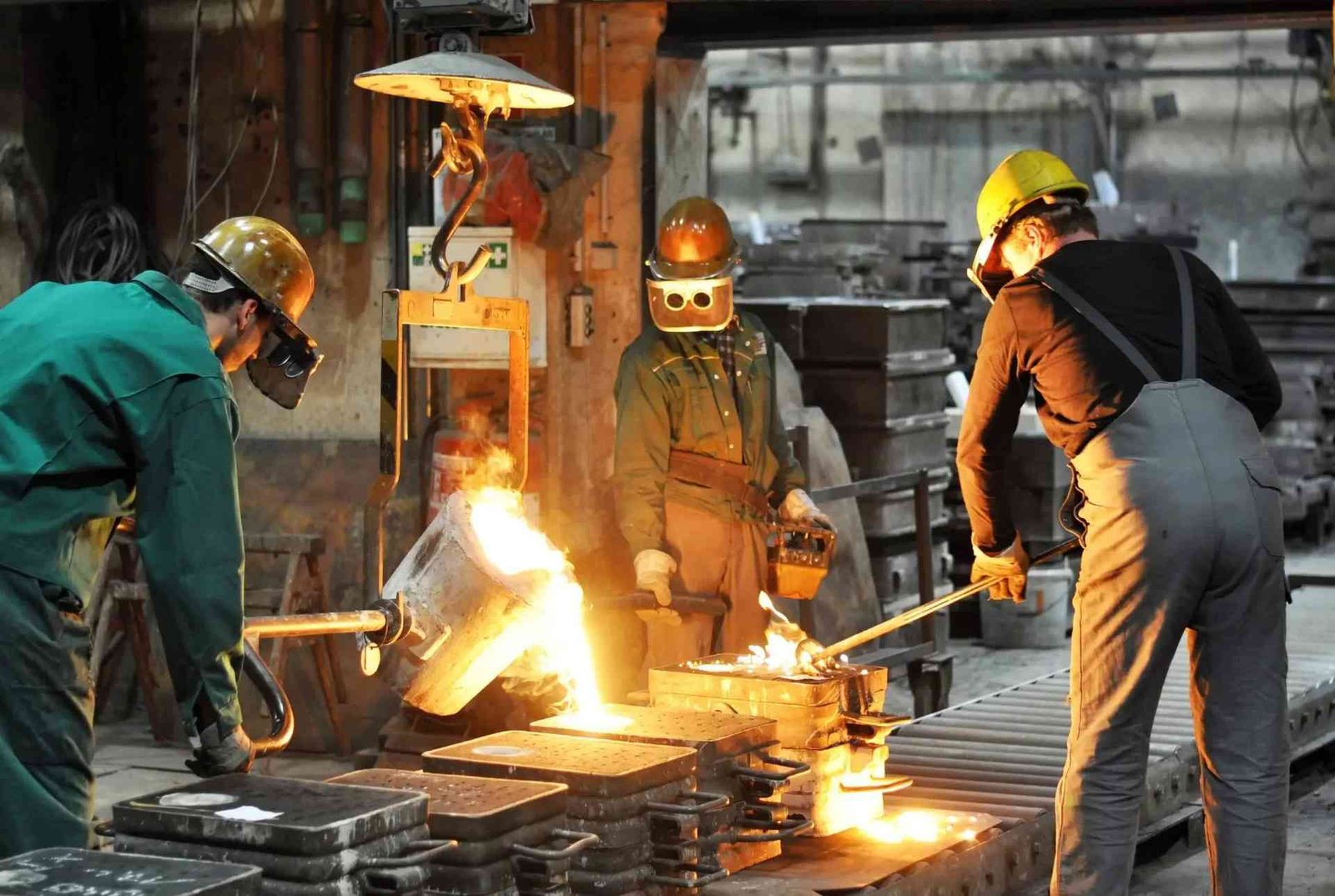
Next comes the dramatic part. You pour molten metal, which is glowing orange and hot enough to melt skin instantly, into the hole. The metal fills the cavity. Because sand is porous, air can escape, preventing bubbles. Once the metal cools and hardens, you simply break the sand away. The result is a rough metal part. It isn’t pretty—it has a rough, sandy texture—but it is strong and cheap. This is how we make heavy machinery parts, manhole covers, and giant ship propellers.
Die Casting: High-Speed Metal Manufacturing
Sand casting is great for big, simple things, but what if you need to make a million tiny, detailed parts, like the zipper pull on your jacket or the body of a Hot Wheels car? Sand is too rough for that. For high detail and high speed, we use Die Casting.
In this process, the mold isn’t made of sand; it is made of hardened steel. This steel mold, called a “die,” is incredibly expensive to make, sometimes costing tens of thousands of dollars. But once you have it, you can use it hundreds of thousands of times.
Instead of pouring the metal in with a ladle, a machine shoots molten metal (usually softer metals like zinc, aluminum, or magnesium) into the steel mold at extremely high pressure. It slams the metal in so fast that it fills every microscopic detail before it has a chance to freeze. Within seconds, the mold opens, and the part pops out, already solid. It is incredibly fast. A die casting machine can spit out a new part every few seconds. This is why small metal toys and intricate car parts are so affordable. The expensive machine pays for itself by sheer volume.
Injection Molding: How Plastic Conquered the World
Look at the device you are reading this on. If it has a plastic case, it was almost certainly made by Injection Molding. This is the king of plastic manufacturing. It is the reason plastic is everywhere in our lives, from bottle caps to car dashboards.
The process starts with plastic pellets. These look like little beads of rice. They are fed into a machine that looks like a giant cannon. Inside the barrel, a large screw turns, pushing the pellets forward while heaters melt them into a thick, gooey paste. This paste is then injected—shot like a syringe—into a cold metal mold.
The magic of injection molding is precision. The pressure is so high that the plastic copies the surface of the mold perfectly. If the mold is polished like a mirror, the plastic part comes out shiny. If the mold has a leather texture, the plastic comes out looking like leather. Once the plastic touches the cold metal, it freezes instantly. The mold opens, pins push the part out, and the cycle repeats. It is a mesmerizing rhythm: inject, cool, eject. This process is fully automated, allowing factories to run 24/7 with very few humans, producing millions of identical parts with zero waste.
Blow Molding: The Secret Behind Hollow Objects
Injection molding is great for solid objects, but what about hollow things? How do you make a milk jug or a soda bottle? You can’t injection mold a bottle because you would never be able to get the solid core out of the narrow neck. For hollow shapes, we use a clever trick called Blow Molding.
Imagine blowing a bubble with bubble gum. You start with a small lump, blow air into it, and it expands to create a hollow sphere. Blow molding works the same way. The machine creates a hot tube of plastic called a “parison.” It looks like a test tube.
This hot tube is placed inside a bottle-shaped mold. Then, a nozzle blows compressed air into the tube. The plastic expands like a balloon until it hits the cold walls of the mold. It freezes instantly in the shape of the bottle. This is why plastic bottles often have a seam line running down the side; that is where the two halves of the mold met. It is a incredibly fast process, capable of making thousands of bottles an hour. It is lightweight, uses very little plastic, and creates the containers for almost every liquid we buy.
Investment Casting: Jewelry and Jet Engines
Sometimes, you need a metal part that is so complex and precise that neither sand nor steel molds will work. Maybe you are making a diamond ring with intricate filigree, or a turbine blade for a jet engine that has tiny cooling channels inside it. For these masterpieces, we use Investment Casting, also known as “Lost Wax” casting.
This is an ancient technique used by artists for thousands of years. You start by making the object out of wax. You can sculpt it by hand or 3D print it. Then, you dip this wax model into a ceramic slurry—a liquid that hardens like stone. You do this again and again until the wax is covered in a thick ceramic shell.
Here is the genius part: you heat the shell up. The wax melts and runs out (hence “Lost Wax”), leaving a perfect, empty hollow inside the ceramic. You then pour molten metal into this ceramic shell. Because the ceramic is seamless, the metal captures every single fingerprint and detail from the original wax. Once the metal cools, you shatter the ceramic shell to reveal the part. It is a destructive process—you destroy the mold to get the part—but the level of detail is unmatched. It is the gold standard for accuracy.
Rotational Molding: Making Giant Hollow Shapes
We talked about blow molding for small bottles, but what if you need to make a giant hollow object, like a kayak, a large water tank, or a playground slide? You can’t blow a bubble that big; the plastic would get too thin and pop. Instead, we use Rotational Molding, or “Rotomolding.”
This process is slow and gentle. You take a hollow metal mold and fill it with a measured amount of plastic powder. You close the mold and put it in a giant oven. But here is the trick: while it is heating, the mold rotates slowly in all directions. It tumbles and turns.
As the mold gets hot, the plastic powder melts and sticks to the walls. Because the mold is rotating, the plastic coats the inside evenly, creating a consistent wall thickness. After a while, you move the mold to a cooling chamber (still rotating) until the plastic hardens. Then you open it up and pull out a giant, stress-free hollow part. This is how we make those big orange traffic barriers and indestructible cooler boxes. It is a low-pressure process, which means the parts are very strong and durable.
3D Printing vs. Molding: The Future of Manufacturing
You cannot talk about shaping materials in 2026 without mentioning 3D Printing, or Additive Manufacturing. For a long time, people thought 3D printing would replace casting and molding entirely. Why buy an expensive mold when you can just print the part?
The reality is that they work together. Molding is still king for mass production. If you need 100,000 plastic forks, injection molding can make them for a penny each in a few days. 3D printing would take years and cost dollars per fork. However, 3D printing has revolutionized the prototyping phase.
Before a company spends $50,000 on a steel mold, they will 3D print the part to check if it fits. They might even 3D print the mold itself for a short run of parts. This is called “Rapid Tooling.” It allows inventors to test ideas in days instead of months. We are also seeing “Hybrid Manufacturing,” where a metal part is cast roughly to shape and then a 3D printer adds detailed features on top of it. It is not a competition; it is a partnership that allows us to make better things faster.
The Role of Materials: Why We Choose What We Choose
The casting or molding process is only half the story. The other half is the material. Engineers spend their lives choosing the perfect cocktail of chemicals for each job. In casting, the choice of metal changes everything. Cast iron is heavy and absorbs vibration, which makes it perfect for engine blocks and piano frames. Aluminum is light and cools fast, making it great for aerospace parts. Bronze resists corrosion from salt water, making it ideal for boat propellers.
In plastic molding, the choices are even more vast. You have thermoplastics, which can be melted and remelted (like recycling). Polyethylene (PET) is used for bottles because it is safe for food. ABS is used for Lego bricks because it is hard and holds bright colors. Then you have thermosets, which burn if you try to melt them again. These are used for things that need to resist heat, like electrical sockets or car engine covers. The magic of modern manufacturing is matching the right process with the right material to create a product that is cheap, strong, and beautiful.
Sustainability in Casting and Molding
For a long time, foundries and plastic factories were seen as dirty polluters. In 2026, the industry is working hard to clean up its act. Sustainability is now a major part of the process. In metal casting, recycling is huge. Most cast iron and aluminum parts are made from scrap metal—old cars and cans melted down to be born again. This uses significantly less energy than mining new ore.
In plastics, the focus is on the “Circular Economy.” This means designing parts that are easier to recycle. Instead of gluing different types of plastic together (which makes them impossible to recycle), manufacturers are using snap-fits or single materials. We are also seeing the rise of bio-plastics made from corn or algae, which can be molded just like oil-based plastics but break down naturally. Factories are also using electric furnaces instead of coal, powered by solar and wind energy. It is a slow transition, but the goal is to keep making the things we need without destroying the planet we live on.
Conclusion
The world of casting and molding is a hidden miracle. It is a testament to human ingenuity. We have figured out how to take the raw, chaotic materials of the earth—rocks, oil, and sand—and tame them. We melt them down, force them into shapes, and cool them into the tools that define our civilization.
From the cup you drink from to the car you drive, every object has a story of heat, pressure, and precision. As we look to the future, these processes will become smarter, cleaner, and more efficient, but the basic principle remains the same. It is the magic of transformation. It is the art of taking a liquid dream and turning it into a solid reality. Next time you pick up a plastic fork or look at a street lamp, take a second to appreciate the incredible journey it took to get there. It really is a marvel of the modern world.