
We spend roughly one-third of our entire lives at work. Whether that work happens on a construction site, in a busy hospital, inside a high-rise office building, or even at a desk in our own living room, the environment we work in shapes our health. For a long time, “health and safety” was seen as a boring set of rules, a clipboard exercise that managers did just to avoid getting fined. But in 2026, we understand that it is so much more than that. It is the foundation of a good life. It is the promise that when you leave your house in the morning to earn a living, you will return home in the evening in the same condition, safe and sound.
Occupational safety is not just about avoiding big accidents. It is about the subtle things too. It is about how you sit, the air you breathe, the stress levels you manage, and the culture of care that surrounds you. When a workplace is safe, people are happier. They are more productive because they aren’t worrying about getting hurt. They stay with the company longer. This guide explores the essential pillars of modern health and occupational safety. We will break down complex regulations into simple, human actions that anyone can take to make their workday safer and healthier.
Understanding the Real Value of a Safe Workplace
Safety is often talked about in terms of money. Companies worry about lawsuits, insurance premiums, and government fines. While those are real concerns, the true cost of an unsafe workplace is human. An injury doesn’t just affect the worker; it ripples out to their family, their friends, and their coworkers. If someone throws out their back lifting a box incorrectly, they might not be able to pick up their children for a month. If someone suffers burnout from chronic stress, it affects their marriage and their sleep.
Creating a safe workplace sends a powerful message to every employee: “You matter.” It tells the team that their well-being is more important than a deadline or a profit margin. When people feel valued, they work better. They look out for each other. A strong safety culture builds trust. It transforms a group of individuals into a team. It changes the mindset from “I have to follow these rules so I don’t get in trouble” to “I follow these rules because I want my friends to be safe.” This shift is the most important step in any safety program. It moves safety from a requirement to a core value.
The Hidden Dangers of Slips, Trips, and Falls
It might surprise you to learn that the most common cause of injury in the workplace isn’t heavy machinery or dangerous chemicals. It is gravity. Slips, trips, and falls account for a massive percentage of all workplace accidents, and they happen in every single industry. You are just as likely to trip over a loose cable in a law office as you are to slip on an oil patch in a mechanic’s garage.
Preventing these accidents starts with good housekeeping. This means keeping the floors clear. We often get busy and leave a box in the hallway “just for a minute,” or we trail an extension cord across a walkway because we are rushing to set up a presentation. These are traps waiting to happen. The rule should always be: if you drop it, pick it up. If you spill it, wipe it up. Do not wait for the cleaning crew.
Flooring matters too. In areas that get wet, like entryways on a rainy day or kitchen floors, non-slip mats are essential. They provide grip when shoes are slippery. Speaking of shoes, footwear is a critical part of safety. In many jobs, wearing flip-flops or high heels is a recipe for disaster. Encouraging sensible, grippy shoes can prevent a broken ankle or a concussion. Lighting is the final piece of the puzzle. You cannot avoid a hazard if you cannot see it. Stairwells, parking lots, and storage rooms need bright, working lights. If a bulb burns out, fixing it should be a priority, not an afterthought.
Why Ergonomics is More Than Just a Comfortable Chair
For millions of people, work involves sitting at a desk and staring at a computer screen for eight hours a day. It seems safe enough—after all, you aren’t lifting heavy rocks. but the human body was not designed to be frozen in one position for that long. This leads to Repetitive Strain Injuries (RSI), chronic back pain, carpal tunnel syndrome, and “tech neck.” These injuries don’t happen suddenly; they build up slowly over years until one day, you are in constant pain.
Ergonomics is the science of fitting the work to the worker, not the other way around. It starts with your chair. Your feet should be flat on the floor, and your knees should be at a 90-degree angle. If your legs are dangling, you are cutting off circulation and putting strain on your lower back. You need a chair that supports the natural curve of your spine.
Then there is the monitor. The top of your screen should be at or slightly below your eye level. If you are looking down at a laptop screen on a desk, your head is hanging forward. This puts massive pressure on your neck muscles. Raise the laptop on a stack of books or a stand and use a separate keyboard. Finally, movement is the best medicine. The “20-20-20 Rule” is a simple way to save your eyes and body: every 20 minutes, look at something 20 feet away for 20 seconds. Stand up and stretch every hour. These micro-breaks allow blood to flow back into your muscles and reset your posture.
Mental Health is the New Frontier of Safety
In the past, occupational safety focused entirely on the physical body. Today, we know that mental health is just as critical. A worker who is stressed, anxious, exhausted, or depressed is an unsafe worker. When your mind is racing with worry, your reaction times slow down. You lose focus. You forget to check the safety guard on a machine or you miss a step on a ladder.
Workplaces need to treat mental health hazards just as seriously as physical ones. High-pressure deadlines that require skipping breaks are a hazard. A toxic manager who yells and belittles staff is a hazard. Bullying and harassment are safety issues. To fix this, companies need to create an environment where it is okay to not be okay.
Managers should be trained to spot the signs of burnout: irritability, withdrawal, missed deadlines, or constant fatigue. They need to encourage staff to take their vacation time and disconnect from email after hours. A rested brain is a safe brain. Providing access to counseling services or stress management workshops is a great step, but the culture has to support it. If an employee admits they are overwhelmed, the response should be support, not punishment. When psychological safety exists, people feel comfortable speaking up about problems before they turn into disasters.
The Critical Role of Personal Protective Equipment (PPE)
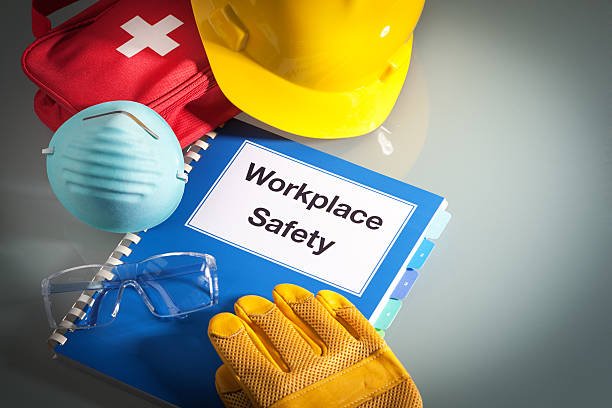
Personal Protective Equipment, or PPE, is the shield that stands between you and danger. Depending on your job, this could be a hard hat, safety glasses, steel-toed boots, high-visibility vests, or earplugs. The purpose of PPE is to reduce exposure to hazards that cannot be fully eliminated. It is the last line of defense.
The biggest challenge with PPE is getting people to wear it. It can be uncomfortable. Safety glasses fog up in the heat. Earplugs make it hard to hear conversations. Helmets get sweaty. Because of this, workers are often tempted to take it off “just for a second” to finish a quick task. That second is when the accident happens.
To improve compliance, PPE needs to fit the person. You cannot hand a “one size fits all” pair of gloves to a person with tiny hands and expect them to work safely. Loose gloves can get caught in machinery; tight gloves cut off circulation. Employers should invest in high-quality gear that is adjustable and comfortable. Furthermore, training is essential. Workers need to understand why they are wearing it. Explain that hearing loss from loud machinery is permanent and irreversible. Show them how a safety helmet absorbs the shock of a falling hammer. When people understand the specific risks to their own bodies, they stop seeing PPE as a uniform and start seeing it as armor.
Handling Hazardous Materials and Chemicals Safely
Many jobs involve working with chemicals. This ranges from industrial solvents and paints in a factory to strong cleaning bleach in a school or hospital. If handled incorrectly, these substances can cause chemical burns, respiratory failure, or even explosions. The most dangerous chemical is the one you don’t know about.
This is why labeling is the absolute law of safety. Every bottle, jar, and bucket in a workplace must have a clear label. You should never find a clear liquid in an unmarked water bottle sitting on a shelf. Is it water? Is it vinegar? Is it acid? No one knows until it is too late. Labels must state what the chemical is and what the specific danger is (e.g., “Flammable,” “Corrosive,” “Toxic”).
Alongside labels, every workplace must have Safety Data Sheets (SDS) readily available for every chemical they use. These sheets are instructions for survival. They tell you exactly what to do if you spill the chemical on your skin, or if you accidentally inhale the fumes. These sheets shouldn’t be locked in an office; they should be in a binder that everyone can access in an emergency. Proper storage is also vital. You cannot store bleach and ammonia together because they create deadly gas if mixed. You cannot store flammable paints near a heater. Respect the chemistry, and it will be a useful tool. Disrespect it, and it becomes a weapon.
Fire Safety and Emergency Preparedness Plans
Fire is a terrifying prospect in any building. It spreads fast, it is unpredictable, and the smoke can be just as deadly as the flames. A robust fire safety plan is non-negotiable. Every single person in the building needs to know exactly what to do when the alarm rings. There should be no confusion, no asking “Is this a drill?”, and no wondering where the exit is.
Exits must be clear at all times. It is very common for businesses to use emergency exit hallways as extra storage. They stack boxes, broken chairs, or cleaning carts in front of the back door because “nobody uses it.” This is illegal and dangerous. In a fire, the lights might go out and the room will fill with smoke. People will be panicking. If they run to an exit and find it blocked by a stack of pallets, they are trapped.
Drills are essential. Fire drills might feel annoying when you are busy, but they build muscle memory. When the real emergency happens, your brain stops thinking logically and reverts to habit. If you have practiced the drill, your body will know to walk to the assembly point. Fire extinguishers are also critical, but only if people know how to use them. The PASS technique (Pull, Aim, Squeeze, Sweep) should be taught to everyone. However, staff should also be taught when not to fight a fire. If the fire is bigger than a trash can, the correct action is to get out and stay out. Property can be replaced; people cannot.
Building a Positive Safety Culture From the Top Down
Safety rules written in a handbook mean nothing if the boss ignores them. The culture of a workplace is defined by what the leaders do, not what they say. If a manager walks onto a construction site without a hard hat, every employee sees that. It sends a silent message that the rules are optional. It tells the team that safety is just for show.
On the other hand, if the manager is the first one to put on their safety glasses, the first one to buckle their seatbelt, and the first one to clean up a spill, the team will follow. Leadership has to demonstrate that safety is a value, not a priority. Priorities change; values do not.
A positive culture is one where people look out for each other. It is a place where a coworker can say, “Hey, you forgot your gloves,” and the response is “Thanks for reminding me,” rather than “Mind your own business.” This requires building relationships. When workers care about each other, they don’t want to see their friends get hurt. Management can foster this by celebrating safety wins. Instead of just punishing people for accidents, reward them for long streaks of accident-free work. Praise people who spot hazards and report them. Make safety a point of pride, not a point of fear.
The Importance of Regular Training and Open Communication
The world changes, and so do the risks. New machinery brings new dangers. New chemicals bring new protocols. New employees bring a lack of experience. This is why safety training cannot be a one-time event that happens on your first day of work. It must be continuous.
Regular “toolbox talks” or safety briefings keep the topic fresh in everyone’s mind. These don’t have to be long, boring lectures. A five-minute chat at the start of the week about a specific topic—like lifting techniques or winter driving safety—can be very effective. It keeps safety at the front of the brain.
Communication must also go both ways. The employees are the eyes and ears of the workplace. They are the ones doing the job every day. They know which ladder is wobbly. They know which machine makes a weird noise. But they will only tell you if they feel safe doing so. If a worker reports a hazard and gets yelled at for “complaining,” they will never report anything again. You need a system where reporting hazards is easy and encouraged. Treat “near misses”—accidents that almost happened but didn’t—as free learning opportunities. Investigate them without blame. Ask “Why did this almost happen?” and fix the system so it doesn’t happen for real next time. When communication is open, you can fix small problems before they become tragedies.
Conclusion
Health and occupational safety is a journey, not a destination. You never reach a point where you can say, “Okay, we are safe now, we can stop trying.” It requires constant vigilance. It requires a commitment to never cutting corners, even when the deadline is tight and the budget is low.
By focusing on these core areas—from ergonomic desks to clear fire exits, from mental health support to proper chemical storage—we build workplaces that are resilient. We create environments where people can thrive. The ultimate goal of all this effort is simple but profound: to ensure that every single person goes home to their family at the end of the day, safe, healthy, and ready to enjoy their life. That is a goal worth working for every single day.