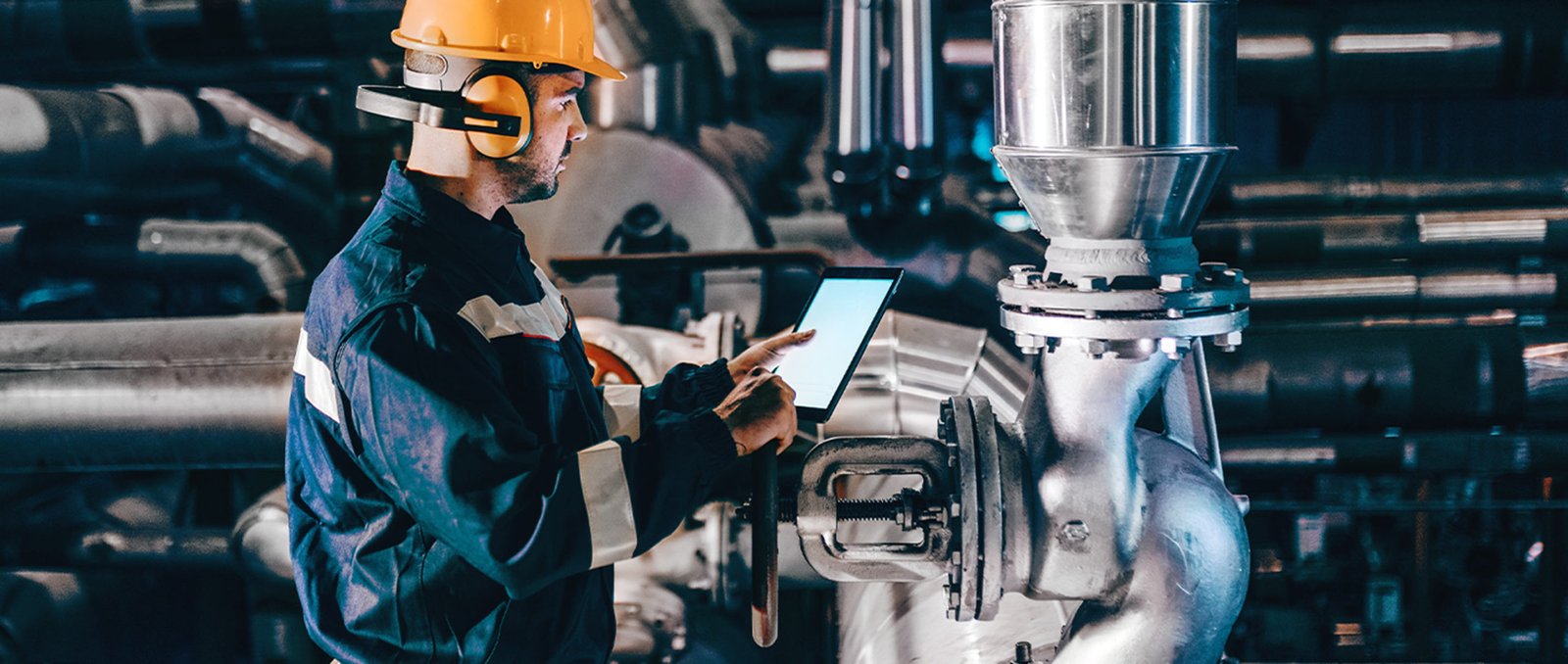
When you think of a factory, what image comes to your mind? For a long time, we pictured grease, gears, sparks, and loud noises. We imagined people in overalls shouting over the roar of engines. But if you walk into a modern manufacturing plant in 2026, you will see something very different. It is quiet. It is clean. And while there are still machines, the real work is happening on screens.
The modern factory runs on code. Just like your smartphone has apps to help you navigate, bank, and talk to friends, factories have “Industrial Software” to help them build cars, package food, and refine oil. This software is the invisible brain that controls the heavy metal muscles of the machines. It tells the robots when to move, it tells the warehouse when to order more steel, and it tells the manager when a motor is about to break. This digital revolution has changed manufacturing from a game of muscle into a game of mind. It has made factories safer, faster, and incredibly efficient. This guide is going to walk you through the world of industrial software. We will strip away the confusing tech talk and use simple, plain English to explain exactly how these digital solutions work and why they are the most valuable tool in the modern industrial toolbox.
The Digital Brain of the Factory: Manufacturing Execution Systems (MES)
Imagine a chef in a busy restaurant kitchen. They have a list of orders, they have ingredients in the fridge, and they have cooks at the stove. If the chef had to run around shouting every single instruction and checking every single pot, it would be chaos. They need a system. In a factory, that system is called a Manufacturing Execution System, or MES.
An MES is the operating system of the factory floor. It is the bridge between the office (where people plan what to make) and the machines (where things actually get made). In the old days, orders were written on paper “travelers” that moved with the product. If the paper got lost or coffee was spilled on it, nobody knew what to do next.
With MES, everything is digital. When a raw piece of metal arrives at a machine, the operator scans a barcode. A screen instantly shows them exactly what to do: “Drill three holes here, here, and here.” As the machine works, the MES tracks it in real-time. It knows that Job #123 started at 9:00 AM and finished at 9:15 AM. It counts how many good parts were made and how many were scrap. This allows managers to sit in an office and see a live map of the entire factory. They can see bottlenecks instantly. If Machine A is running slow, the MES flags it red on the screen so someone can go fix it. It replaces guesswork with facts.
Seeing the Future with Digital Twins and Simulation
Have you ever played a video game where you build a city or a theme park? You can try out crazy designs, delete them, and start over without spending a penny of real money. What if you could do that with a billion-dollar factory? In 2026, we can. It is called a “Digital Twin.”
A Digital Twin is an exact virtual copy of a physical machine or a whole factory. It lives inside a computer. It looks like a 3D video game, but it follows the laws of physics. If you have a robot arm in the real world, you have a digital robot arm on the screen. The digital one moves exactly like the real one.
Engineers use Digital Twins to predict the future. Let’s say you want to speed up the assembly line by 20%. Instead of just turning up the speed dial on the real line and hoping nothing breaks, you test it on the Digital Twin first. You speed up the simulation. The software might tell you, “If you do this, the motor will overheat in two hours.” You just saved yourself a massive breakdown. You can crash the digital twin a thousand times to find the perfect setting before you ever touch the real equipment. It is like having a time machine that lets you see the consequences of your decisions before you make them.
ERP Systems: The Backbone of Business Operations
While the MES runs the factory floor, there is an even bigger software system running the business side of things. It is called Enterprise Resource Planning, or ERP. Think of the ERP as the central nervous system of the company. It connects everything: money, inventory, sales, and people.
Before ERP, different departments didn’t talk to each other. The sales team would sell 500 units of a product, but they wouldn’t know that the warehouse only had 50 units in stock. The warehouse would order more parts, not knowing that the finance team hadn’t paid the supplier yet. It was a mess of phone calls and spreadsheets.
An ERP connects all these dots. When a salesperson sells a product, the ERP automatically tells the warehouse to ship it. It tells the factory to make more to replace what was sold. It tells the purchasing department to buy more raw materials. And it tells the finance department to send an invoice to the customer. It creates a “Single Source of Truth.” Everyone is looking at the same numbers. If the ERP says there are 10 widgets in stock, everyone from the CEO to the forklift driver knows there are exactly 10 widgets. This stops arguments and ensures that the business flows smoothly without constant meetings to catch up.
Designing in a Digital World: CAD and CAM Explained
Before you can build anything, you have to draw it. In the past, this meant drafting tables, pencils, rulers, and huge sheets of blue paper. If you wanted to change the size of a hole, you had to erase it and redraw it by hand. Today, we use Computer-Aided Design (CAD).
CAD allows engineers to build 3D models of parts on a screen. They can rotate the part, zoom in to see microscopic details, and “explode” it to see how all the pieces fit together. They can even run stress tests in the software to see if the part will break under pressure. It turns engineering into a digital art form.
But a drawing on a screen can’t tell a machine what to do. That is where Computer-Aided Manufacturing (CAM) comes in. CAM software takes the beautiful 3D model from CAD and translates it into a language the machine understands (usually G-code). It tells the machine, “Move the cutter to this coordinate, spin at 5,000 RPM, and cut a line 2 inches long.” The combination of CAD and CAM means we can go from a bright idea in an engineer’s head to a finished metal part in a few hours, with mathematical precision that no human hand could match.
The Cloud and Edge Computing Revolution
Software generates a lot of data. A single modern factory might generate terabytes of information every day from sensors, cameras, and logs. Where do we put all this data? For a long time, companies kept giant servers in their own basements. This was expensive and risky (what if the basement flooded?). Today, we use “The Cloud.”
The Cloud just means storing your data on giant, secure servers run by companies like Amazon (AWS), Microsoft (Azure), or Google. It allows you to access your factory data from anywhere in the world. A manager on vacation in Hawaii can check the production numbers on their phone. It is secure, scalable, and cheap.
However, sometimes the Cloud is too far away. If a robot sees a person walking in front of it, it needs to stop now. It can’t wait for the data to go to the Cloud and come back. That split-second delay (latency) could cause an accident. This is why we use “Edge Computing.” Edge computing means putting a small, powerful computer right next to the machine (at the “edge” of the network). This computer handles the critical, fast decisions instantly. It processes the safety data right there on the floor, while sending the slower, long-term data (like daily production counts) up to the Cloud for storage. It gives us the best of both worlds: instant reaction times and infinite storage.
Cybersecurity in Industry: Locking the Digital Doors
There is a dark side to connecting all your machines to the internet. If you can access your factory from your phone, theoretically, a hacker could too. In the old days, you couldn’t hack a lathe because it wasn’t connected to anything. To sabotage a factory, you had to physically break in with a hammer. Today, cyber threats are real.
Industrial cybersecurity software is the digital lock on the door. It is much stronger than the antivirus you have on your home laptop. It creates “Firewalls” that strictly control who can talk to the machines. It uses encryption to scramble data so that even if a hacker steals it, they can’t read it.
One of the most important concepts is the “Air Gap.” This involves keeping the critical machine networks physically separate from the office networks where people check email. This ensures that if someone in HR clicks a bad link in an email, the virus cannot jump over to the robots on the assembly line. We also use software to monitor for weird behavior. If a machine that normally sends data to the main server suddenly starts trying to send data to a computer in a different country, the software spots it and blocks it instantly. In 2026, cybersecurity is not an afterthought; it is as important as wearing safety glasses.
Artificial Intelligence and Machine Learning on the Floor
We hear about Artificial Intelligence (AI) everywhere, but in factories, it isn’t about robot overlords. It is about pattern recognition. This is often called Machine Learning (ML).
Imagine you are inspecting apples on a conveyor belt. You look for bruises. After a thousand apples, your eyes get tired. An AI camera system doesn’t get tired. You show the software 10,000 pictures of good apples and 10,000 pictures of bruised apples. The software “learns” what a bruise looks like. Then, you put it on the line. It watches the apples fly by at high speed. It spots a bruise that is smaller than a pinhead and triggers a jet of air to blast that apple into the reject bin.
AI is also used for “Predictive Maintenance.” Machines vibrate when they run. As they get older or broken, that vibration changes slightly. A human might not hear it, but AI software analyzes the vibration data 24/7. It notices a tiny change in the pattern and sends an alert: “The bearing in Motor #4 is acting weird. It will probably fail in 3 days.” This allows the maintenance team to fix it during a lunch break, rather than having the motor explode in the middle of a rush order. It turns unexpected disasters into planned maintenance.
Supply Chain Management Software: Tracking the Journey
Making the product is only half the battle. You also have to get the raw materials to the factory and get the finished product to the customer. This is the Supply Chain, and managing it is incredibly complex. It involves trucks, ships, trains, customs, and weather.
Supply Chain Management (SCM) software is the control tower. It tracks everything. It connects to the GPS in delivery trucks so you know exactly where your steel shipment is. If there is a storm in the Atlantic Ocean that delays a ship, the software sees it and alerts you: “Your parts will be late. You should slow down production or order from a local supplier.”
In 2026, this software uses Blockchain technology to create trust. A blockchain is a digital ledger that cannot be changed. When a farmer picks coffee beans, they scan a code. When the beans are roasted, they scan it again. When they are shipped, they scan it again. The software records this journey. When you buy that coffee, you can scan a QR code and see the entire history, proving that it is fair-trade and organic. SCM software removes the mystery from logistics and ensures that shelves are never empty.
The Human Element: User Experience (UX) in Factories
For a long time, industrial software was ugly. It was just rows of green numbers on a black screen. It was hard to read and hard to learn. Workers hated using it. They would keep secret paper notebooks because the software was too confusing.
In 2026, we realized that software is for humans. The new trend is “User Experience” (UX). Industrial apps now look like the apps on your iPhone. They are colorful, intuitive, and easy to touch. Instead of typing in complex codes, a worker might drag and drop icons on a tablet.
We also use Augmented Reality (AR). A maintenance worker can put on a pair of smart glasses and look at a broken machine. The software projects a digital arrow onto the real machine, pointing to the bolt they need to turn. It projects the manual right in front of their eyes. This helps new workers learn faster and make fewer mistakes. By making software easy to use, we empower the people on the floor. We stop treating them like data entry clerks and start treating them like the skilled technicians they are.
Conclusion: The Software-Defined Future
The industrial world has gone through a massive transformation. We moved from the Age of Steam to the Age of Electricity, and now we are firmly in the Age of Code. Industrial software and digital solutions are no longer just “nice to have” extras; they are the foundation of manufacturing.
These tools allow us to do more with less. They allow us to waste less material, use less energy, and keep people safer. They give us the superpowers of sight (cameras), foresight (simulation), and telepathy (cloud connectivity). But at the end of the day, it is important to remember that software is just a tool. It does not replace the creativity, skill, and judgment of the human beings running the plant. It amplifies them. It handles the boring math and the repetitive tracking so that people can focus on solving problems and inventing the next big thing. As we move forward, the factories that win will not just be the ones with the biggest machines, but the ones with the smartest code.