Imagine walking into a factory fifty years ago. It was likely loud, hot, and filled with the smell of oil and metal. Machines banged and clattered, and workers rushed around trying to keep everything running. If a machine broke down, the whole production line stopped. Mechanics would scramble to find the problem, shouting over the noise, while managers stressed about the lost time and money. It was a world of reactive chaos. You fixed things only after they broke. You made decisions based on gut feelings because you didn’t have the data to know better.
Now, fast forward to 2026. Walk into a modern “Smart Factory.” It is surprisingly quiet. The floors are clean. Instead of rushing around, workers are looking at tablets. A machine hums along, and suddenly, a notification pops up on a screen: “Bearing #4 is getting warm. Please replace it during the lunch break.” The machine didn’t break; it just told the humans it was feeling a little sick. This is not science fiction. This is the reality of the Industrial Internet of Things, or IIoT. It is a revolution that is changing how we make everything, from cars to cookies. This guide is going to walk you through this incredible technology. We will strip away the confusing buzzwords and explain exactly how smart manufacturing works, why it matters, and how it is making the world more efficient.
Understanding Industrial IoT: The Internet for Machines
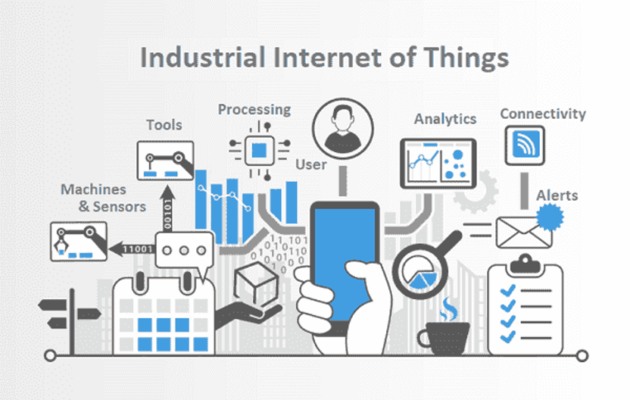
We all know what the “Internet of Things” (IoT) is in our daily lives. It is your smart fridge telling you that you are out of milk. It is your video doorbell letting you see who is at the door from your phone. It is your watch tracking your heartbeat. Industrial IoT (IIoT) is the exact same concept, but applied to massive machines instead of household gadgets.
In a smart factory, every machine is connected to the internet. They are fitted with sensors—tiny electronic devices that can measure temperature, vibration, sound, and speed. These sensors act like the nerve endings of the factory. They constantly gather information and send it to a central brain (a computer server or the cloud).
This means that the machines can “talk” to each other and to the people running them. A conveyor belt can tell a robotic arm, “Hey, I’m slowing down, so you should slow down too.” A furnace can tell a fan, “It’s getting too hot in here, turn on.” This web of communication turns a factory from a collection of dumb metal tools into a single, intelligent organism. It allows us to see exactly what is happening inside the machines in real-time, something that was impossible just a decade ago.
How Smart Manufacturing Changes the Game
Smart Manufacturing is the result of using IIoT. It is the strategy of using all that data to make better decisions. In the old days, manufacturing was a “black box.” You put raw materials in one end, and hopefully, finished products came out the other. What happened in the middle was often a mystery. If production was slow on Tuesday, nobody really knew why. Was it the machine? Was it the operator? Was it the quality of the steel?
With Smart Manufacturing, the lights are turned on. Every step of the process is tracked. We know exactly how fast the drill was spinning at 10:00 AM. We know the exact temperature of the plastic when it was molded. We know how much energy the lights were using.
This visibility changes the game because it allows for “optimization.” If you know that Machine A runs 10% slower when the room is cold, you can turn up the heat and get 10% more product for free. It allows managers to stop guessing and start knowing. It reduces waste because you catch mistakes immediately. If a label printer runs out of ink, the system pauses instantly instead of printing 500 blank labels that have to be thrown away. It creates a factory that is flexible, efficient, and surprisingly eco-friendly.
Predictive Maintenance: Fixing Things Before They Break
The single biggest advantage of IIoT is something called “Predictive Maintenance.” In the past, factories used “Reactive Maintenance”—fixing things when they broke. This is the most expensive way to run a business because unexpected downtime costs thousands of dollars a minute. Then came “Preventive Maintenance”—changing parts on a schedule, like changing the oil in your car every 3,000 miles. This is better, but it is still wasteful. You might be throwing away a perfectly good part just because the calendar says so.
Predictive Maintenance is the Goldilocks solution. It uses data to tell you exactly when a part is about to break. Let’s say you have a giant motor. As the bearings inside start to wear out, they vibrate differently. A human ear can’t hear it, and a human hand can’t feel it. But a vibration sensor can.
The sensor sends data to the cloud, where Artificial Intelligence (AI) analyzes it. The AI notices a tiny change in the vibration pattern and sends an alert: “This motor will fail in 48 hours.” Now, the maintenance team can plan. They can order the part and swap it out during a scheduled break. The factory never stops unexpectedly. This saves billions of dollars globally every year. It turns maintenance from a panic-inducing emergency into a boring, planned task.
The Magic of Sensors: Giving Machines Five Senses
At the heart of every smart factory are the sensors. These are the eyes, ears, and skin of the machine. Without them, there is no data. In 2026, sensors have become incredibly cheap, small, and powerful. You can stick a sensor the size of a postage stamp onto a machine, and it will run for years on a tiny battery.
There are sensors for everything. Temperature sensors ensure that ovens aren’t burning the cookies. Pressure sensors ensure that pipes aren’t about to burst. Optical sensors (cameras) look at products as they fly by on a conveyor belt. They can spot a scratch on a phone screen or a missing cap on a soda bottle in a fraction of a second.
We even have acoustic sensors that listen to the noise a machine makes. They can tell the difference between a healthy “hum” and a sick “clunk.” By covering a factory in these sensors, we create a “Digital Twin.” This is a virtual copy of the factory that lives on a computer screen. A manager in New York can look at the Digital Twin of a factory in Japan and see exactly how it is running, down to the speed of a single fan. It bridges the gap between the physical world and the digital world.
Real-Time Data: Stopping the Guesswork
One of the most frustrating things in business is lagging information. In a traditional factory, managers would get a report at the end of the month saying, “We lost money three weeks ago because Machine B was slow.” That information is useless because it is too late to do anything about it.
IIoT provides “Real-Time Data.” This means you see the problem the second it happens. Imagine a dashboard on an iPad. It has green lights for machines that are running well and red lights for machines that are stopped. If a red light pops up, the manager can walk over and fix it immediately.
This speed allows for “Agile Manufacturing.” Let’s say a clothing company sees a sudden trend on social media for yellow shirts. In the old days, it would take months to switch the factory from blue shirts to yellow shirts. With real-time data and smart machines, they can reprogram the dyeing machines and the cutting robots in minutes. They can catch the trend while it is hot. Real-time data makes businesses faster and more responsive to what customers actually want.
Connectivity and 5G: The Speed of Thought
All this data needs a highway to travel on. If you have 5,000 sensors all sending information at once, a standard home Wi-Fi connection would crash instantly. This is why “Connectivity” is a huge part of IIoT.
Factories use specialized networks designed for reliability. You cannot have the internet cut out for even a second when a robot is welding a car chassis. In recent years, 5G has become the standard. 5G is not just for faster movie downloads on your phone; it was built for machines. It has incredibly low “latency.” Latency is the time it takes for a signal to travel. With 5G, that time is almost zero.
This allows for things like wireless robots. In the past, robots had to be bolted to the floor and plugged into the wall. Now, we have robots on wheels that use 5G to talk to the central computer. They can drive around the factory, picking up parts and moving them wherever they are needed. If the Wi-Fi in your house is a dirt road, an industrial 5G network is a twelve-lane superhighway. It handles the massive traffic of a smart factory without breaking a sweat.
Robots and Cobots: Working Safely Side by Side
When people hear “automation,” they often worry about robots taking jobs. While it is true that robots are doing more work, the nature of that work is changing. In a smart factory, we see the rise of “Cobots,” or Collaborative Robots.
Old-school industrial robots were dangerous. They were big, blind, and strong. If you got in their way, they would hit you. They had to be kept in cages. Cobots are different. They are designed to work next to people. They have sensors that feel resistance. If a cobot bumps into your arm, it stops instantly.
This means a human and a robot can work as a team. Imagine a worker assembling a heavy gearbox. The cobot lifts the heavy metal gear and holds it perfectly still in the air. The human then uses their skilled fingers to insert the tiny screws and wires. The robot does the heavy lifting (the “brawn”), and the human does the detailed thinking (the “brain”). This reduces injuries. Workers aren’t breaking their backs lifting heavy boxes anymore. The robots handle the dangerous, dirty, and dull jobs, leaving the humans to do the skilled, interesting work.
Cybersecurity: Locking the Digital Doors
There is a dark side to connecting everything to the internet: hackers. In the old days, you couldn’t hack a lathe because it wasn’t connected to anything. To sabotage a factory, you had to physically break in. Now, a hacker sitting in a basement on the other side of the world can theoretically try to turn off a power plant or mess up a production line.
This is why Cybersecurity is a massive part of IIoT. It is not an afterthought; it is the foundation. Companies spend millions of dollars building “Firewalls”—digital barriers that stop unauthorized people from getting in. They use encryption, which scrambles the data so that even if a hacker steals it, they can’t read it.
It also involves teaching employees. The biggest security weakness is often a human who uses a password like “123456” or clicks on a suspicious email. Smart factories have strict protocols. They use separate networks for the office computers (email, web browsing) and the machine computers (controlling the robots). This “air gap” ensures that even if the office gets a virus, the factory floor keeps running safely. Security is an ongoing battle, but it is one that the industry takes very seriously.
The Skills Gap: Humans Are Still Important
With all this talk of AI and robots, you might think humans are obsolete. The opposite is true. Smart factories actually need more skilled humans, but they need different skills. We have a “Skills Gap.” We have plenty of people who know how to tighten a bolt, but not enough people who know how to program a robot or analyze data.
The worker of 2026 is a “Connected Worker.” They walk the floor with a tablet or even Augmented Reality (AR) glasses. When they look at a machine, the glasses project the repair manual onto the metal. They can see which bolt to turn and which wire to cut.
This means education is critical. Companies are investing heavily in training their staff. A guy who used to drive a forklift is now being taught how to manage the fleet of self-driving forklifts. A woman who used to inspect parts by hand is now teaching the AI camera what a “bad” part looks like. The jobs are becoming less physically demanding and more mentally engaging. We aren’t removing the human element; we are upgrading it. The smartest factory in the world is useless without smart people to run it.
The Future of Factories: What to Expect Next
So, where does it go from here? The ultimate goal is the “Autonomous Factory.” This is a factory that runs itself. It orders its own raw materials when stocks run low. It schedules its own maintenance. It adjusts its own speed based on electricity prices. If electricity is cheap at night, the factory speeds up. If it is expensive in the afternoon, it slows down.
We are also seeing “Distributed Manufacturing.” Instead of one giant factory in China making phones for the whole world, we might see hundreds of small, smart factories in every city. These local factories would use 3D printing and IIoT to make products on demand. You order a pair of shoes, and a local factory prints them to your exact foot size and ships them to you the same day.
This reduces shipping costs and pollution. It makes the supply chain stronger because a problem in one country doesn’t stop the whole world. The factory of the future is smaller, cleaner, closer to home, and smarter than we ever imagined.
Conclusion: Embracing the Revolution
Industrial IoT and Smart Manufacturing are not just trends that will fade away. They are the new standard. They are the reason why your new car is safer, why your phone is cheaper, and why we can produce food for billions of people.
It can be easy to feel overwhelmed by the speed of technology. It feels like the world is changing too fast. But if we look closely, we see that these changes are solving the problems that have plagued us for centuries. They are reducing waste, preventing injuries, and making work more meaningful.
We are moving away from the era of the “cog in the machine.” In the smart factory, the human is the pilot, and the machine is the plane. By embracing these tools—the sensors, the data, the robots—we are building a world that is more efficient and sustainable. The revolution is already here, and it is quietly humming along in a factory near you, building the future one smart decision at a time.