
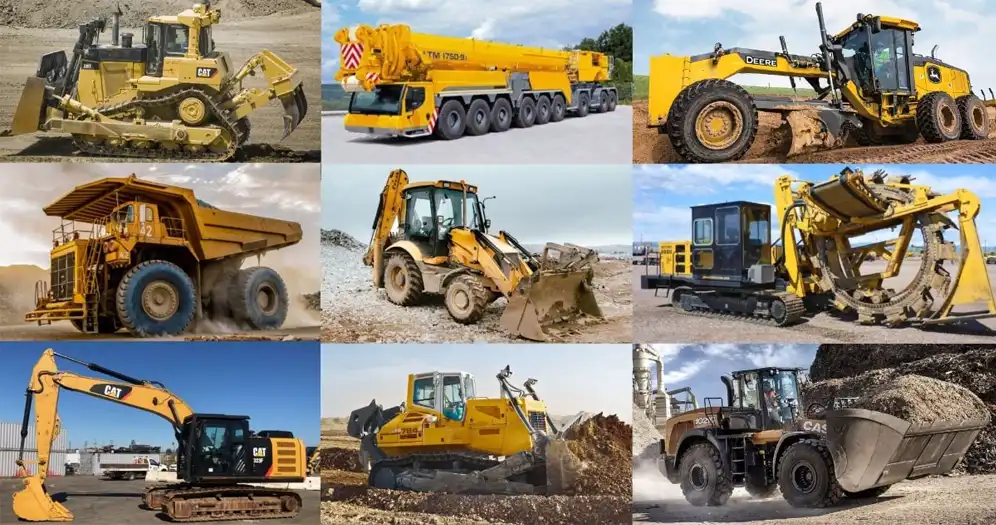
When you walk past a construction site, the first thing you notice is the noise. There is the beeping of trucks backing up, the roar of diesel engines, and the clanging of metal on rock. It feels chaotic, but it is actually a carefully choreographed dance. Every machine on that site has a specific job to do, and without them, our modern world simply would not exist. We wouldn’t have skyscrapers, bridges, smooth roads, or even the house you live in. Construction equipment is the muscle behind human civilization.
For many people, these machines are just big, yellow, and loud. They all look kind of the same. But if you take a closer look, you will see that each one is a marvel of engineering designed for a specific purpose. Understanding these machines helps you appreciate the incredible effort that goes into building our cities. Whether you are a contractor looking to expand your fleet, a student interested in engineering, or just someone who loved playing with toy trucks in the sandbox, this guide is for you. We are going to explore the giants of the job site, breaking down what they do and how they work in simple, easy-to-understand language.
The Kings of the Job Site: Excavators and Bulldozers
If there is one machine that represents construction, it is the excavator. This is the machine with the long arm and the big bucket that digs deep into the earth. Excavators are fascinating because they can rotate a full 360 degrees. The operator sits in a cab that spins around on top of the tracks, allowing them to dig in one spot and dump the dirt behind them without ever moving the wheels.
Excavators come in all sizes. You have the tiny “mini-excavators” that can fit through a garden gate to dig a backyard pool, and you have the massive mining excavators that are as big as a house. The key to their power is hydraulics. Those shiny silver cylinders on the arm are filled with fluid under high pressure. When the operator moves a joystick, the fluid pushes the arm with incredible force, allowing it to rip through hard clay and rock. They are used for digging trenches, demolishing old buildings, and lifting heavy pipes.
Then you have the bulldozer. If the excavator is the digger, the bulldozer is the pusher. It is a tractor with a massive metal plate, called a blade, on the front. Bulldozers are incredibly strong. They have tracks instead of tires, which gives them amazing grip on loose soil. They don’t get stuck in the mud. A bulldozer’s job is to push massive piles of earth, clear trees, and level the ground to make it flat. The blade can be tilted and angled to cut into the ground or just skim the surface. When you see a new road being built, the bulldozer is usually the first machine on the scene, clearing the path for everything else.
The Versatile Workers: Backhoe Loaders and Skid Steers
While excavators and bulldozers are specialized giants, the backhoe loader is the Swiss Army Knife of construction. You have almost certainly seen one. It looks like a tractor with a scoop on the front and a small digging arm on the back. This dual design makes it incredibly useful for smaller jobs. A city worker can use the front loader to move snow or piles of dirt, and then turn the seat around to use the backhoe to dig a hole for a pipe repair.
Because they have wheels, backhoe loaders can drive on the road. This means they don’t need to be transported on a trailer for short distances, making them a favorite for municipal governments. They are not as strong as an excavator, but their flexibility makes up for it.
Another versatile favorite is the skid steer loader. These are small, boxy machines that look like little tanks. They are unique because they don’t have a steering wheel. Instead, they steer by locking the wheels on one side while the other side keeps spinning. This allows them to “skid” around and turn within their own footprint. Skid steers are famous for their attachments. You can take the bucket off the front and attach a forklift, a sweeper, a drill, or even a snowblower. They are perfect for tight spaces where big machines can’t fit, like inside a building during a renovation or in a narrow alleyway.
Lifting the Heavy Loads: Cranes and Telehandlers
Once the ground is dug and leveled, you need to start building up. This requires lifting heavy materials like steel beams, bags of cement, and bundles of wood. This is the domain of the crane. Tower cranes are the ones you see fixed on top of skyscrapers. They build themselves up as the building grows taller. They are essential for high-rise construction because they can lift heavy loads hundreds of feet into the air with pinpoint precision.
However, not every job needs a tower crane. For lower buildings, we use mobile cranes. These are trucks with telescopic booms that can extend high into the air. They drive to the site, put down “outriggers” (legs that stabilize the truck), and lift HVAC units onto roofs or trusses onto houses.
A newer and very popular machine is the telehandler. It looks like a forklift, but instead of just going up and down, it has a long telescopic arm that reaches out and up. Imagine you need to put a pallet of bricks on the third floor of a building, but there is a muddy ditch in front of the wall. A normal forklift would get stuck. A telehandler can park on the road and extend its arm over the ditch to place the bricks gently through the window. It combines the lifting power of a forklift with the reach of a crane, making it indispensable for modern framing and masonry crews.
Paving the Way: Graders and Road Rollers
Building a building is one thing, but building the road to get there is a different challenge. Road construction requires extreme precision. You cannot just dump asphalt on the ground; it has to be perfectly flat and sloped so that rainwater drains off. The champion of this precision is the motor grader.
A motor grader is a long machine with a blade hidden underneath its belly, between the front and rear wheels. This long wheelbase makes it very stable. As it drives over rough ground, the blade shaves off the high spots and fills in the low spots. The operator controls the angle of the blade to create the “crown” of the road—the slight hump in the middle that makes water run to the sides. It is a difficult machine to master, requiring a very skilled operator.
Once the dirt is graded, you need to pack it down. If you build a road on loose dirt, it will sink and crack. This is where the road roller, or compactor, comes in. These machines have heavy steel drums instead of wheels. They drive back and forth over the dirt, stone, and asphalt to squash it tight. Many rollers vibrate as they roll. This vibration shakes the soil particles so they fit closer together, creating a rock-hard foundation. You will see small rollers for driveways and massive rollers for interstate highways. Without them, our roads would be full of potholes within a week.
The Foundation of Strength: Concrete Mixers and Pumps
Concrete is the most used man-made material on Earth. It is the liquid stone that forms the foundation of our world. Getting concrete to the job site is a race against time because once it is mixed, it starts to harden. The concrete mixer truck is a familiar sight. It has a large drum on the back that spins constantly. This spinning keeps the concrete moving so it doesn’t set before it arrives.
When the truck arrives, it pours the concrete down a chute. But what if you need to pour concrete into the middle of a massive foundation, or onto the tenth floor of a building? You can’t carry it in buckets. You need a concrete pump.
A concrete pump is a truck with a massive robotic arm that folds out like a transformer. A pipe runs along the arm. The mixer truck pours concrete into a hopper on the back of the pump truck, and powerful pistons push the wet concrete up the pipe and out the end of the boom. The operator uses a remote control to guide the boom, placing the concrete exactly where it is needed. It is a messy, heavy, and loud job, but it allows us to pour hundreds of cubic yards of concrete in a single day, creating the solid slabs that our houses and factories sit on.
Going Underground: Trenchers and Drills
Not all construction happens above ground. A huge part of our infrastructure—water pipes, sewer lines, electric cables, and internet fiber—lives buried beneath our feet. To install these, we need specialized equipment.
The trencher is a machine designed to cut a narrow slice into the earth. It looks like a giant chainsaw on wheels. A metal chain with sharp teeth spins around a bar, digging into the dirt and pulling it up. Trenchers are incredibly fast compared to an excavator. They leave a clean, straight ditch that is perfect for laying a cable or a small pipe.
Sometimes, you cannot dig a trench because there is a road or a driveway in the way. You don’t want to tear up the pavement just to run a wire. In this case, we use horizontal directional drills. These are amazing machines that drill a hole sideways underground. The operator stands at the machine and guides the drill bit under the road. Once the drill reaches the other side, they attach the pipe or cable to the drill string and pull it back through the hole. It is like threading a needle underground. This technology has saved billions of dollars in road repairs and traffic jams.
Keeping it Safe: Maintenance and Operator Training
Construction equipment is powerful, which means it is also dangerous. These machines have huge blind spots. The operator sits high up in the cab and often cannot see a person standing right behind the tracks. This is why safety is the most important part of the job.
Modern equipment is packed with safety features. They have backup cameras, just like your car, but bigger and tougher. They have loud alarms that beep whenever the machine moves backward. Many new machines have sensors that detect if a person is too close and will automatically stop the engine. But technology isn’t enough. Everyone on a construction site must wear high-visibility vests and hard hats so they can be seen.
Maintenance is also a safety issue. If a hydraulic hose bursts, the heavy arm of an excavator can drop instantly. Operators have to do a “walk-around” inspection every morning. They check the oil, look for leaks, inspect the tires, and grease the joints. A well-maintained machine is a safe machine. It is also a profitable machine. If a bulldozer breaks down in the middle of a job, the whole crew has to stop working. Mechanics are the unsung heroes who keep these metal beasts running in dust, mud, and rain.
The Business Choice: Renting vs. Buying Equipment
For a construction company, equipment is the biggest expense. A new large excavator can cost as much as a luxury house. This leads to a big question: should you buy the machine or rent it?
Buying makes sense if you use the machine every single day. If you are an excavation company, you need your own excavator. You can take care of it, customize it, and you always know it is available. However, buying ties up a lot of cash, and you are responsible for all the repairs and storage.
Renting is becoming very popular, especially for specialized machines. If you only need a crane for three days to lift some trusses, it makes no sense to buy one. You rent it. The rental company delivers it, fixes it if it breaks, and picks it up when you are done. This allows small companies to take on big jobs without going into debt. It also lets contractors try out the latest models before they commit to buying. In 2026, the rental market is huge, offering everything from small drills to massive dump trucks on a daily or weekly basis.
The Future of Construction: Electric and Autonomous Machines
We are living through a revolution in construction equipment. For a hundred years, diesel fuel was the only option. Diesel engines are strong and reliable, but they are loud and dirty. In 2026, we are seeing the rise of electric construction equipment.
Electric excavators and loaders are battery-powered. They are incredibly quiet. This is a huge advantage in cities. You can work early in the morning or late at night without waking up the neighborhood. They also have zero exhaust fumes, which makes them safer for workers, especially when working inside tunnels or buildings. They are smoother to operate and require less maintenance because they don’t have engines with pistons and oil filters.
We are also seeing autonomous machines. These are robots. On some large mining sites and highway projects, you can see dump trucks driving themselves. They use GPS and sensors to navigate without a driver. There are bulldozers that can grade a field perfectly flat using satellite data, with the operator just sitting in the cab watching the screens. While we aren’t at the point where robots build whole houses alone, the technology is assisting operators, making the work safer and more precise.
Conclusion: The Tools of Civilization
Construction equipment is more than just heavy metal. It is the toolkit of civilization. Every school, hospital, road, and home was built by these machines. They amplify our human ambition. We dream of tall towers and long bridges, and these machines make those dreams a reality.
The next time you pass a construction site, take a moment to watch. Look at the excavator pivoting gracefully. Watch the roller smoothing the path. Listen to the hum of the engines. You are watching the world being built in real-time. Whether it is the raw power of a bulldozer or the delicate reach of a telehandler, each machine plays a vital role in the story of human progress. As technology advances, these machines will become cleaner, quieter, and smarter, but their purpose will remain the same: to shape the earth and build the future.