
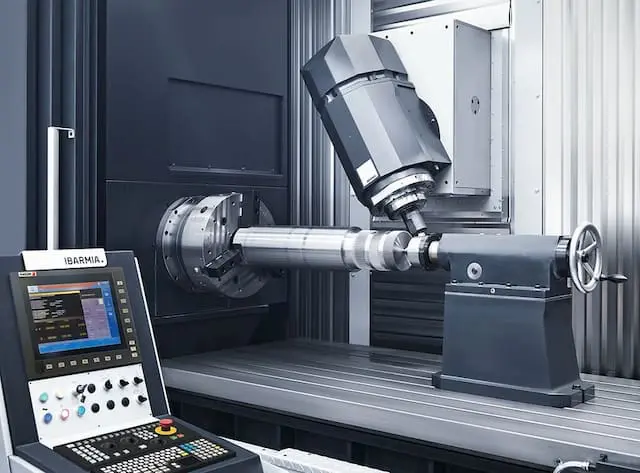
Look around the room you are sitting in right now. Maybe you are at a desk, sitting on a chair with metal legs, or holding a smartphone. Have you ever stopped to wonder how these things were actually made? We often see the finished product—shiny, smooth, and perfect—but we rarely think about the violent, loud, and incredibly precise processes that got it there. This is the world of machining and fabrication. It is a world where raw blocks of cold metal are sliced, bent, melted, and shaved into the shapes that build our modern lives.
For most people, terms like “milling,” “turning,” and “fabrication” sound like technical jargon that only engineers need to worry about. But understanding these processes changes the way you look at the world. It turns a boring metal bracket into a masterpiece of engineering. In 2026, the technology behind these processes has advanced wildly, blending old-school craftsmanship with futuristic robotics. This guide is going to walk you through the fascinating journey of how raw materials are transformed into useful objects. We will strip away the complex engineering terms and use simple, plain English to explain exactly how the things you use every day are created.
Understanding the Core Difference Between Machining and Fabrication
Before we dive into the specific tools, we need to clear up a common confusion. People often use the words “machining” and “fabrication” interchangeably, but they are actually two completely different philosophies of making things. Think of it like the difference between a sculptor and a builder.
Machining is a “subtractive” process. Imagine you have a block of wood or stone. To make a statue, you chip away the parts you don’t want until the shape reveals itself. Machining is the same, but with metal. You start with a solid block or a bar, and you use sharp tools to cut away layers until you are left with the part you need. It is precise, messy, and creates a lot of scrap shavings.
Fabrication, on the other hand, is usually an “additive” or “assembly” process. It is like building a house with Lego bricks or welding steel beams together. You start with standard sheets, tubes, or beams of metal. You cut them to size, bend them into shape, and then join them together (usually by welding) to create a larger structure. Machining makes the engine parts of a car; fabrication makes the frame and the body of the car. Both are essential, but they require very different mindsets and tools.
The Art of Turning: How Lathes Shape the World
Let’s start with one of the oldest and most important machining processes: Turning. This happens on a machine called a lathe. If you have ever seen a potter using a wheel to shape clay, you already understand the basic principle of a lathe.
In turning, the metal part spins at incredibly high speeds, sometimes thousands of revolutions per minute. A cutting tool, which is hard and sharp, stays stationary. The machinist (or the computer) moves the cutting tool into the spinning metal. As it touches the metal, it peels off a layer, just like peeling a potato. Because the part is spinning, the result is always cylindrical or round.
Lathes are used to make anything that is round: screws, bolts, car axles, candlesticks, and baseball bats. Modern lathes are amazing to watch. They spray coolant liquid everywhere to keep the metal from overheating, and the metal chips fly off in long, curly ribbons. A skilled machinist can make a part that is accurate to within a fraction of a human hair. It is a process that combines brute force with delicate precision.
Milling Machines: The Sculptors of the Workshop
If turning is for round parts, milling is for everything else. A milling machine is the workhorse of the machining world. It works in the opposite way of a lathe. In a lathe, the part spins and the tool stays still. In a mill, the part stays still (clamped tightly to a table) and the cutting tool spins.
Think of a drill press, but much more powerful. A spinning cutter, which looks a bit like a drill bit but with sharp edges on the sides, moves around the metal block. It carves out pockets, flattens surfaces, and cuts complex contours. It is like using a very high-speed chisel.
Milling is used to make flat surfaces, engine blocks, phone cases, and complex brackets. Modern milling machines can move in five different directions at once (5-axis machining). This allows them to carve incredibly complex shapes, like the turbine blades inside a jet engine or the artificial hip joints used in surgery. Watching a mill work is hypnotic; it eats through solid steel as if it were butter, leaving behind a shiny, mirror-like finish.
Drilling and Boring: The Quest for the Perfect Hole
Making a hole sounds simple. You grab a drill, pull the trigger, and push. But in the world of professional manufacturing, making a hole is a serious science. “Drilling” is the process of using a spinning bit to cut a round hole into solid material. We use this for bolt holes, oil channels in engines, and ventilation.
However, a standard drill bit is not very accurate. It can wobble slightly, making the hole a little too big or a little crooked. This is where “Boring” comes in. Boring is a finishing process. Once a hole is drilled, a boring tool goes inside to widen it to the exact, perfect diameter. It acts like a tiny lathe inside the hole, shaving off the inner walls to make them perfectly smooth and straight.
There is also “Reaming,” which is like giving the hole a final polish. A reamer removes a tiny amount of material to ensure the hole is the exact size needed for a pin or a bearing to fit snugly. Without these processes, the engines in our cars would rattle apart, and our airplanes would vibrate dangerously. The humble hole is actually a masterpiece of engineering.
Cutting and Shearing: The First Step of Fabrication
Now, let’s switch gears to fabrication. Before you can build a structure, you need to cut your raw material to the right size. Fabricators buy metal in huge sheets, often measuring 4 feet by 8 feet or larger. They need to slice these sheets up into usable pieces.
For rough work, they might use “Shearing.” A shear is essentially a giant, hydraulic pair of scissors. It has a massive blade that comes down and chops through steel plates with a loud thud. It is fast and cheap, but it only cuts straight lines.
For complex shapes, fabricators use high-tech cutting methods. “Laser Cutting” uses a focused beam of light to melt through the metal with extreme precision. It can cut intricate patterns, like the lace-like designs on decorative gates or the precise parts for a computer chassis. “Waterjet Cutting” is even cooler. It uses a stream of water mixed with abrasive sand, blasted at such high pressure that it slices through thick steel, stone, or glass. It is like power washing on steroids. These cutting technologies allow fabricators to turn a flat sheet of metal into a puzzle of parts ready to be assembled.
Bending and Forming: Shaping Metal Without Removing It
Once the metal is cut, it is often just a flat piece of steel. To make it useful—to turn it into a box, a bracket, or a car door—you need to bend it. This is called “Forming.” The most common tool for this is the “Press Brake.”
A Press Brake is a massive machine that has a V-shaped die on the bottom and a V-shaped blade on the top. The operator slides the sheet metal between them. The machine then presses the top blade down with tons of force, squashing the metal into the V-shape. This creates a crisp, clean angle. By doing this multiple times, a fabricator can turn a flat sheet into a complex computer case or an electrical box.
There is also “Rolling.” This is used to make curves. The metal sheet is passed through three rollers that gently curve it. This is how we make large pipes, tanks for tanker trucks, and silos for farms. Metal has a “memory”—it wants to spring back to its original flat shape—so fabricators have to over-bend it slightly so that when it springs back, it settles into the perfect angle. It requires a lot of skill and intuition to get right.
Welding: The Glue That Holds the Modern World Together
If you want to join two pieces of wood, you use glue or nails. If you want to join two pieces of metal permanently, you use welding. Welding is the process of melting two pieces of base metal together, usually adding a “filler” material to bridge the gap. When it cools, the two pieces become one single, solid piece of metal.
There are many types of welding, but the most common are MIG and TIG. MIG welding (Metal Inert Gas) is like using a hot glue gun. You pull a trigger, and a wire is fed out of the gun. An electrical arc melts the wire and the base metal instantly. It is fast, easy to learn, and great for thick steel beams in buildings.
TIG welding (Tungsten Inert Gas) is the artistic side of welding. It requires using a torch in one hand and feeding a filler rod with the other hand, all while controlling the heat with a foot pedal. It is slow and difficult, but it produces beautiful, stack-of-dimes welds that are incredibly strong. TIG is used for delicate things like bicycle frames, race car roll cages, and aerospace parts. Welding is dangerous—it involves blinding light, toxic fumes, and molten metal—but it is the essential “glue” of fabrication.
Grinding and Finishing: Making It Look Beautiful
After machining or welding, the part works, but it might not look good. It might have sharp edges (burrs), rough weld beads, or scratches. This is where finishing comes in. It is the final step that separates a professional job from an amateur one.
Grinding involves using an abrasive wheel to smooth out rough welds. It creates a shower of sparks and a lot of noise. Fabricators grind down the excess metal until the joint is flush and smooth, making it look like the metal was made in one piece.
For machined parts, finishing might involve “Sandblasting,” where sand is shot at the part to give it a uniform matte texture. Or it might involve “Anodizing,” a chemical bath that adds a hard, colorful protective layer to aluminum parts (like your red or blue smartphone case). Finishing isn’t just about making things pretty; it protects the metal from rust and corrosion, ensuring the product lasts for years.
CNC Machining: The Brains Behind the Operation
In the past, machinists controlled lathes and mills by hand, turning crank handles to move the tools. It was slow and required a lifetime of practice. Today, almost all professional machining is done by CNC (Computer Numerical Control).
CNC machines are robots. A programmer designs the part on a computer using CAD (Computer Aided Design) software. Then, they use CAM (Computer Aided Manufacturing) software to translate that design into code—usually G-Code. This code tells the machine exactly where to move, how fast to spin, and how deep to cut.
Once the code is loaded, the machine runs automatically. It can change its own tools, check its own work with lasers, and run all night without a human in the room. CNC allows for “repeatability.” If you make a part by hand, the second one might be slightly different from the first. With CNC, the millionth part is identical to the first one. This is how we can mass-produce complex items like car engines and smartphone bodies so affordably and reliably.
The Future: Additive Manufacturing and Hybrid Systems
We are entering a new era of making things. While traditional machining takes material away, “Additive Manufacturing” (or 3D Printing) builds it up. Metal 3D printers use lasers to melt metal dust, layer by layer, into shapes that are impossible to machine. Imagine a hollow metal ball with a complex lattice structure inside it—you can’t drill that out, but you can print it.
The most exciting development is “Hybrid Manufacturing.” These are machines that combine a CNC mill and a 3D printer in one box. The machine can print a metal shape, and then instantly switch to a milling cutter to smooth out the surface and drill precise holes. This gives manufacturers the best of both worlds: the design freedom of printing and the precision of machining.
As we look to 2026 and beyond, these processes will become cleaner, faster, and more automated. But at the core, the principle remains the same. It is about taking the raw, stubborn materials of the earth and using human ingenuity to shape them into the tools, vehicles, and structures that define our civilization. Whether it is the sparks of a welder or the hum of a CNC mill, machining and fabrication are the heartbeat of the modern world.