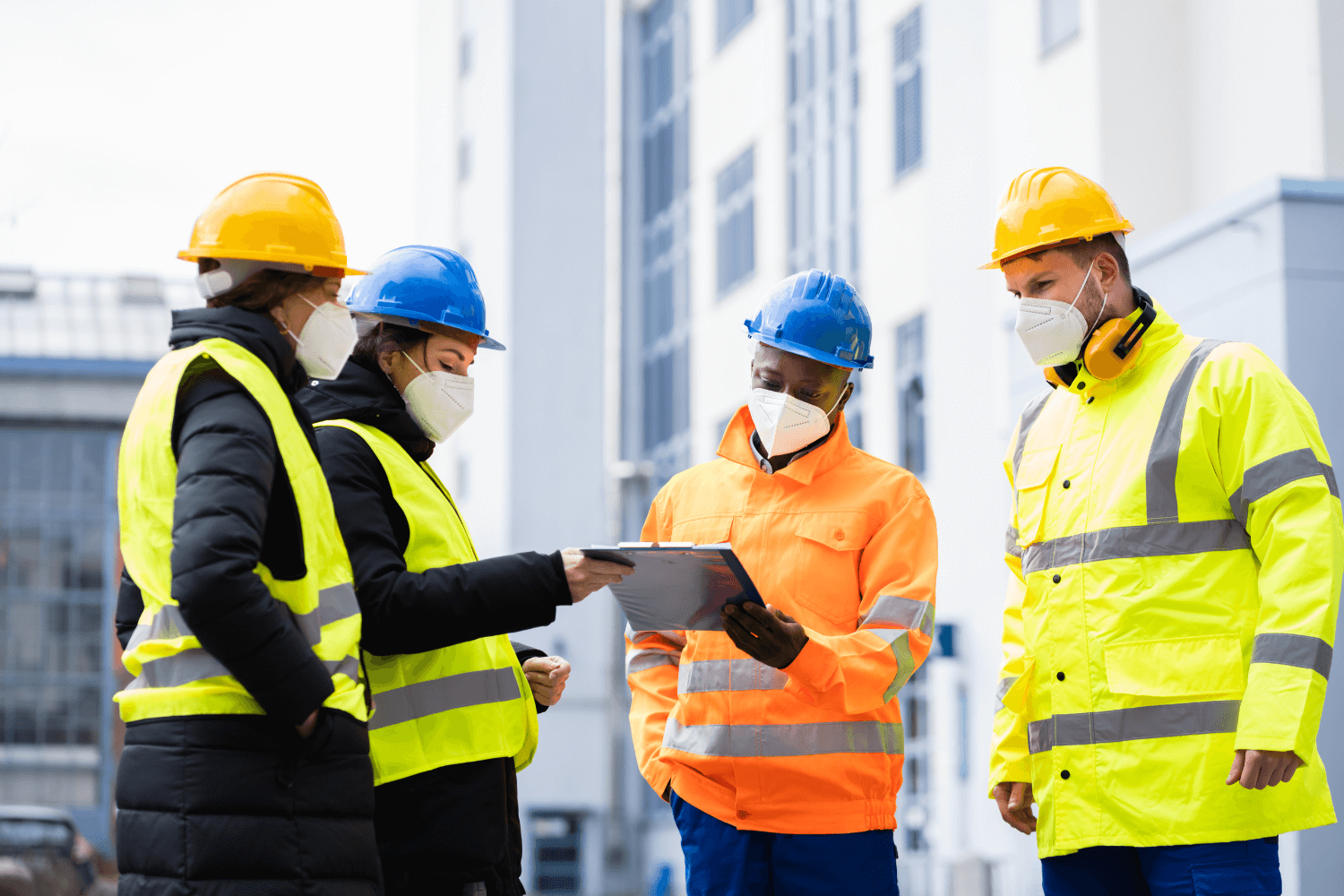
We go to work every day expecting to come home safe. Whether you sit at a desk, stand on a construction site, or work in a busy kitchen, safety is the invisible thread that holds everything together. But safety doesn’t just happen by accident. It is the result of careful planning, constant vigilance, and a commitment to looking out for one another. In 2026, the world of work is faster and more complex than ever before. We have new technologies, new machinery, and new ways of working that bring both incredible opportunities and new risks.
To navigate this landscape, businesses and employees need two critical tools: Risk Assessment and Safety Training. These aren’t just buzzwords or boxes to check on a government form. They are the foundation of a healthy, productive, and happy life. Risk assessment is the act of looking into the future and spotting danger before it strikes. Safety training is the act of giving people the skills and knowledge they need to protect themselves when danger appears. When these two things work together, accidents go down, morale goes up, and everyone wins. This guide is going to walk you through the essentials of spotting risks and training your team, using simple, plain English to make the workplace safer for everyone.
What is Risk Assessment and Why Does It Matter?
Imagine you are about to cross a busy street. Before you step off the curb, you look left, you look right, and you listen for cars. You notice a puddle and step around it. You see a car speeding and wait for it to pass. That split-second process is a risk assessment. You identified a hazard (the car), you evaluated the risk (getting hit), and you put a control measure in place (waiting on the sidewalk).
In the workplace, risk assessment is exactly the same process, just more formal. It is a careful examination of what, in your work, could cause harm to people. It allows you to weigh whether you have taken enough precautions or if you should do more. The goal isn’t to eliminate every single risk—that is impossible—but to reduce them to a reasonably safe level. If you run a warehouse, you can’t stop gravity, but you can stop heavy boxes from falling on people’s heads by securing the shelves.
Why does this matter? Because the cost of ignoring risk is too high. Beyond the obvious tragedy of human injury or loss of life, accidents cost money. They lead to damaged equipment, higher insurance premiums, legal fees, and lost productivity. A single accident can bankrupt a small business. But more importantly, a safe workplace is a respectful workplace. When employees see that management cares enough to identify and fix hazards, they feel valued. They work harder and stay longer. Risk assessment is the ultimate proof that a company cares about its people.
The Five Steps to a Perfect Risk Assessment
Risk assessment can seem complicated, but it really boils down to five simple steps. If you follow this logic, you can assess the safety of anything, from a nuclear power plant to a coffee shop.
Step 1: Identify the Hazards. Walk around your workplace and look at what could reasonably be expected to cause harm. Ask your employees what they think; they may have noticed things that aren’t obvious to you. Check the manufacturers’ instructions for equipment or chemicals. Look back at your accident records to see what has hurt people in the past.
Step 2: Decide Who Might Be Harmed and How. Think about everyone who enters your workspace. This includes warehouse workers, office staff, cleaners, visitors, and contractors. Consider people with disabilities or new/expectant mothers who might be at greater risk. For each hazard, be clear about how they might be hurt. “Slipping on wet floor” is more useful than just “Wet floor.”
Step 3: Evaluate the Risks and Decide on Precautions. This is the core of the process. For each hazard, ask yourself: How likely is it that someone will get hurt? And if they do get hurt, how bad would it be? If a risk is high, you must act. Can you get rid of the hazard altogether? If not, how can you control it? Maybe you replace a toxic chemical with a safe one. Maybe you install a guard rail. Maybe you provide personal protective equipment (PPE).
Step 4: Record Your Findings and Implement Them. If you have five or more employees, you are required by law to write down your significant findings. But even if you are smaller, it is good practice. Write down the hazard, the risk, and the action you took. Then, actually do it. A risk assessment in a drawer is useless. Put the non-slip mats down. Fix the broken ladder.
Step 5: Review Your Assessment and Update If Necessary. Workplaces change. You bring in new machines, you hire new staff, you change processes. Every time something changes, your risks change. Review your assessment at least once a year to make sure it is still valid. If you have a near-miss accident, review it immediately to stop it from becoming a real accident next time.
Identifying Hidden Hazards in the Modern Workplace
We tend to think of hazards as big, scary things: spinning blades, toxic fumes, or fire. But in 2026, many of the most dangerous risks are invisible.
Consider ergonomics. If an office worker sits in a bad chair for eight years, they might develop chronic back pain or repetitive strain injury (RSI). This is a serious hazard, even though it doesn’t bleed. Poor lighting can cause eye strain and headaches, leading to mistakes. Noise is another hidden enemy. It doesn’t have to be deafening to be dangerous; a constant low-level hum can cause stress and fatigue over time.
Then there is mental health. Stress is a workplace hazard. If your team is overworked, bullied, or anxious, they are distracted. A distracted worker is an unsafe worker. They are more likely to make bad decisions or forget safety protocols. Your risk assessment needs to include these “soft” hazards. Ask your team: “Are you stressed? Do you have the tools you need? Is the workload manageable?” Treating mental health as a safety issue is one of the biggest leaps forward we have made in the last decade.
The Hierarchy of Controls: Fixing Problems the Right Way
When you find a risk, how do you fix it? You don’t just hand everyone a helmet and call it a day. Safety professionals use a system called the “Hierarchy of Controls.” It is a ranking of the most effective ways to solve a safety problem.
At the top is Elimination. This is the best way. If a chemical is dangerous, stop using it. If a task requires working at height, move the work to the ground. Physically remove the hazard.
Next is Substitution. Replace the dangerous thing with a safe thing. Use a water-based paint instead of a solvent-based one. Use a quiet machine instead of a loud one.
Then comes Engineering Controls. Isolate people from the hazard. Put a cage around the spinning blade. Install a ventilation system to suck away the dust. This protects everyone without them having to do anything.
Administrative Controls are next. change the way people work. Rotate shifts so people aren’t exposed to noise for too long. Put up warning signs. Write safety procedures.
Finally, at the bottom, is Personal Protective Equipment (PPE). This is the least effective method because it relies on people remembering to wear it and wearing it correctly. Safety glasses, gloves, and boots are important, but they should only be used after you have tried everything else. Don’t rely on PPE to fix a broken process.
Why Safety Training is the Heart of Prevention
You can have the safest building in the world, but if the people inside it don’t know what they are doing, accidents will happen. Safety training is the bridge between the rulebook and the real world. It turns “policy” into “action.”
Training does two things. First, it gives people skills. It teaches them how to lift a box without hurting their back. It teaches them how to use a fire extinguisher. It teaches them how to lock out a machine before repairing it. These are practical, hands-on skills that save lives.
Second, and perhaps more importantly, training builds culture. When you take the time to train your team, you are telling them that safety matters. You are giving them permission to stop work if they see something dangerous. You are empowering them to look out for each other. A well-trained team doesn’t just follow rules; they enforce them. They become the eyes and ears of the safety department.
Designing Training That People Actually Remember
We have all sat through boring safety training. A monotone voice reading slides about legislation while everyone checks their phones. This type of training is a waste of time and money. If people are bored, they aren’t learning. And if they aren’t learning, they aren’t safe.
Effective training needs to be engaging. It should be relevant to the specific job. Don’t teach an office worker about forklift safety; teach them about fire exits and ergonomics. Use real-world examples. Tell stories about near-misses that actually happened in your company. “Remember when Dave almost slipped on that oil? Here is how we fixed it.”
Hands-on training is always better than classroom training. Don’t just show a video about lifting; have everyone actually lift a box and correct their form. Let them hold the fire extinguisher. Let them try on the harness. Muscle memory is powerful.
Also, keep it short and frequent. Instead of one massive 8-hour day once a year, try “Micro-Learning.” Do a 10-minute safety talk every Monday morning. Focus on one topic at a time. This keeps safety fresh in everyone’s mind without overwhelming them.
The Importance of Induction Training for New Hires
The first few weeks on a job are the most dangerous. New employees don’t know the layout, they don’t know the risks, and they are often trying to impress the boss by working fast. Statistics show that new workers are significantly more likely to be injured than experienced ones.
Induction training is your chance to set the standard. Before a new hire touches a single tool, they need to know the safety basics. Show them the fire exits. Introduce them to the first aid officer. Walk them through the risk assessment for their specific role.
But induction goes beyond rules. It is about socialization. You need to teach them the “unwritten rules” of safety. “Around here, we always wear our glasses.” ” around here, we don’t run.” “If you aren’t sure, ask.” Pair new hires with an experienced mentor or “safety buddy.” This gives them someone to watch and someone to ask questions to without feeling stupid. Investing heavily in the first week pays off for years in the form of a safe, competent employee.
Refreshers and Drills: Keeping Skills Sharp
Safety knowledge has a half-life. If you don’t use it, you lose it. You might have learned CPR five years ago, but if someone collapsed in front of you right now, would you remember the ratio of compressions to breaths? Probably not.
This is why refresher training is non-negotiable. You need to recertify your first aiders every two or three years. You need to remind forklift drivers of the rules annually. Even simple things like fire drills need to be practiced.
Drills are not just annoying interruptions. They are rehearsals for survival. When an alarm goes off, panic sets in. The brain stops thinking logically. If you have practiced the evacuation route, your body will take over. You will walk to the exit on autopilot. Run drills at different times of the day. Block an exit and see if people find the alternative route. The more you practice the “what ifs,” the less scary the real thing becomes.
Measuring Success: How Do You Know If It’s Working?
Safety is hard to measure because success is when nothing happens. If you have zero accidents this year, does that mean you are safe, or does it mean you are lucky? To truly understand your safety performance, you need to look at “Leading Indicators” and “Lagging Indicators.”
Lagging indicators are the bad things that have already happened: injury rates, lost days, and compensation claims. These are important, but they are reactive. They tell you where you failed.
Leading indicators are proactive. They tell you what you are doing to prevent failure. Look at: How many safety hazards were reported? How many safety audits were completed? What percentage of staff attended training? How quickly are maintenance issues fixed? If these numbers are high, it means your safety culture is alive and well. It means people are actively looking for trouble and fixing it. That is the true measure of a safe workplace.
Creating a Culture Where Everyone Is a Safety Officer
The ultimate goal of all risk assessment and training is to create a culture of shared responsibility. In the old days, safety was the job of the “Safety Manager.” If you saw a spill, you walked past it because “that’s not my job.”
In a modern, safe workplace, safety is everyone’s job. From the CEO to the janitor, everyone feels responsible for the person standing next to them. If a junior employee sees the boss walking into a danger zone without a helmet, they should feel confident enough to say, “Hey boss, you forgot your hat.” And the boss should say, “Thank you.”
This level of psychological safety is hard to achieve, but it is worth it. It requires open communication. It requires a “no-blame” culture where people aren’t afraid to report mistakes. It requires constant positive reinforcement. When you achieve it, you stop needing so many rules and inspections, because the team polices itself. They protect each other because they care, not because they have to.
Conclusion: Safety is a Journey, Not a Destination
Risk assessment and safety training are not tasks you complete and file away. They are living, breathing parts of your business. The world changes, risks evolve, and people forget. You have to keep pushing the rock up the hill every single day.
But the effort is worth it. A safe workplace is a happy workplace. It is a place where people can do their best work without fear. It is a place where families know their loved ones will come home at 5:00 PM. By identifying the risks, training your team, and building a culture of care, you are building a resilient organization that can handle whatever the future throws at it. So take a walk around your workplace today. Look for the hazards. Talk to your team. And make the choice to put safety first. It is the most important investment you will ever make.