
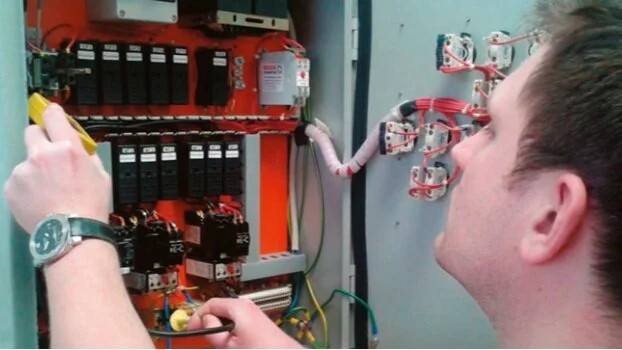
We live in a world that runs on electricity. It is the invisible blood that flows through the veins of our homes, our offices, and our factories. We flip a switch, and the lights turn on. We plug in a machine, and it hums to life. We take this miracle for granted every single day. But what happens when you flip the switch and nothing happens? What happens when a machine stops working, or worse, starts to smoke? That is when the panic sets in. Electrical problems are scary because electricity is dangerous. You cannot see it, you cannot smell it, but if you touch it, it can hurt you.
This is where electrical maintenance and fault finding come in. These are not just skills for electricians; they are essential concepts for anyone who owns a home or runs a business. Maintenance is the art of keeping things running smoothly so they don’t break. Fault finding is the detective work of figuring out what went wrong when they do break. In 2026, our electrical systems are smarter and more complex than ever, but the basic rules of electricity haven’t changed. This guide is going to walk you through the fascinating world of wires and circuits. We will strip away the confusing engineering jargon and use simple, plain English to explain how to keep your electrical systems safe, reliable, and efficient.
Safety First: The Golden Rules of Working with Electricity
Before we talk about fixing anything, we have to talk about staying alive. Electricity is unforgiving. It moves at the speed of light and takes the path of least resistance. If that path happens to be through your body, the results can be tragic. The number one rule of electrical maintenance is simple: Turn It Off.
Never work on “live” equipment unless you absolutely have to, and even then, only if you are a trained professional with special gear. For everyone else, the rule is “Lockout/Tagout.” This means you go to the main breaker panel, turn off the switch that controls the circuit you are working on, and put a physical lock on it. You keep the key in your pocket. This ensures that nobody—not your spouse, not your coworker, not your kids—can accidentally turn the power back on while your hands are touching the wires.
You also need to “Test Before You Touch.” Just because the switch is off doesn’t mean the wire is dead. Maybe the label on the breaker box was wrong. Maybe there is a second power source. Always use a voltage tester to confirm there is zero power before you start working. Wear rubber-soled shoes and avoid standing in water. Use tools with insulated handles. Safety isn’t about being scared; it is about being respectful of the power you are dealing with. When you respect electricity, you can work with it safely.
What is Electrical Maintenance and Why Do We Need It?
Electrical maintenance is like changing the oil in your car. You don’t wait for the engine to explode before you add oil; you do it regularly to prevent the explosion. In the electrical world, maintenance means inspecting, testing, and cleaning the equipment to catch small problems before they become big disasters.
Why is this important? First, it prevents fires. A loose connection in a wire creates heat. Over time, that heat can melt the insulation and start a fire inside your walls. Regular maintenance finds these “hot spots” before they ignite. Second, it saves money. If a motor in a factory is not maintained, it works harder, uses more electricity, and burns out faster. Buying a new motor is expensive; greasing the bearings on the old one is cheap.
There are two main types of maintenance. “Corrective Maintenance” is fixing things when they break. This is the stressful kind. “Preventive Maintenance” is fixing things on a schedule so they don’t break. This is the smart kind. By checking your panels, tightening screws, and cleaning dust out of equipment once a year, you can double the life of your electrical system and sleep better at night knowing your building is safe.
The Essential Tool Kit: What You Need to Find the Problem
You cannot fix an electrical problem with your bare hands. You need eyes that can see the invisible flow of electrons. These “eyes” are your test instruments. You don’t need a van full of expensive gear to do basic troubleshooting, but you do need a few key items.
The most important tool is the Multimeter. This is the Swiss Army Knife of electricity. It can measure Voltage (electrical pressure), Current (electrical flow), and Resistance (electrical blockage). If you learn how to use a multimeter, you can solve 90% of electrical problems.
Next, you need a Non-Contact Voltage Tester. This looks like a thick pen. You touch the tip to a wire or an outlet, and if there is power, the tip glows red and beeps. It is a quick and easy safety check. You also need a good pair of insulated screwdrivers and wire strippers. And finally, for more advanced work, you might need an Insulation Resistance Tester, often called a “Megger.” This tool checks the rubber coating on wires to make sure it hasn’t rotted away. Having the right tools makes you efficient. Instead of guessing, you are measuring. Instead of hoping, you are knowing.
Understanding the Big Three: Voltage, Current, and Resistance
Electrical fault finding is really just applied physics. But don’t worry, you don’t need to be Einstein. You just need to understand the relationship between three things: Voltage, Current, and Resistance. The best way to visualize this is to think of water flowing through a pipe.
Voltage (measured in Volts) is the pressure. It is the pump pushing the water. In your house, the pressure is usually 120 or 230 Volts. Current (measured in Amps) is the water itself flowing through the pipe. This is the actual electricity doing the work. Resistance (measured in Ohms) is the size of the pipe. A wide pipe has low resistance (easy flow), and a skinny pipe has high resistance (hard flow).
Here is the magic rule, called Ohm’s Law: If you increase the pressure (Voltage), the flow (Current) goes up. If you increase the blockage (Resistance), the flow goes down. Fault finding is simply looking for where these rules are broken. If a light bulb won’t turn on, maybe there is no pressure (0 Volts). Maybe the pipe is blocked (Infinite Resistance). Or maybe the pipe burst (Short Circuit). By using your multimeter to check these three values, you can figure out exactly what is happening inside the wires.
The Detective Work: How to Approach Electrical Fault Finding
Imagine you are a detective at a crime scene. You don’t just walk in and start arresting people. You gather evidence, you interview witnesses, and you form a theory. Electrical fault finding works the exact same way. It is a logical, step-by-step process.
Step 1 is “Gather Information.” Ask questions. “When did it stop working? Did you hear a noise? Did you smell smoke? Was it raining?” If the operator tells you, “It stopped when I pressed this button,” you have a great clue. Look at the equipment. Is it burnt? Is a wire hanging loose? Use your eyes and nose before you use your tools.
Step 2 is “Analyze the Circuit.” Look at the diagram or the manual. How is it supposed to work? You need to know the path the electricity takes. Trace it in your mind from the power source to the device.
Step 3 is “Test.” This is where you use your multimeter. A great technique is the “Half-Split Method.” If you have a long circuit with ten switches, don’t check them one by one. Go to the middle (switch #5) and check for power. If you have power there, you know the first half is fine, and the problem is in the second half. You just cut your work in half. Keep splitting the circuit until you find the broken part. This logical approach saves you hours of aimless searching.
Common Electrical Nightmares: Open Circuits and Short Circuits
When you are troubleshooting, you will almost always find one of two problems: an Open Circuit or a Short Circuit. Understanding the difference is the key to fixing them.
An “Open Circuit” means the bridge is out. The road is broken. Imagine you cut a wire with scissors. The electricity tries to flow, but it hits a dead end. The result is that the device simply stops working. The lights go out. The motor stops spinning. To find an open circuit, you use your multimeter to check for continuity (a complete path). If the meter reads “OL” (Over Limit) or doesn’t beep, you have found the break. It could be a broken wire, a burnt-out fuse, or a loose switch.
A “Short Circuit” is the opposite. It means the electricity found a shortcut. Instead of going through the light bulb, the current jumps directly from the hot wire to the neutral wire. Because there is no resistance (no light bulb to slow it down), the current flows incredibly fast. This creates a massive surge of energy that usually causes a spark, a bang, and a tripped breaker. Short circuits are dangerous because they release a lot of heat instantly. Finding them involves looking for burnt wires, melted insulation, or water that has bridged two connections.
The Danger of Loose Connections and Overheating
If you ask any experienced electrician what causes the most problems, they will likely say “loose connections.” It seems like such a small thing. A screw is not tightened all the way. A wire nut is a little bit loose. But in the world of electricity, a loose connection is a disaster waiting to happen.
Electricity needs a tight, solid path to flow. When a connection is loose, the electricity has to “jump” across the tiny gap. This jumping creates resistance. As we learned earlier, resistance creates heat. The looser the connection, the more heat is generated.
This heat causes the metal to expand and contract, which makes the connection even looser. It is a vicious cycle. Eventually, it gets hot enough to melt the plastic insulation around the wire. If there is wood or dust nearby, it can start a fire. This is why “torque” is so important. When you tighten a screw on a breaker, you should use a torque screwdriver to make sure it is tight enough. One of the best maintenance tasks you can do is simply going through your panels and gently tightening every screw. It takes time, but it prevents fire.
Preventive Maintenance: Stopping the Problem Before It Starts
We talked about fixing problems, but how do we stop them from happening in the first place? This is the goal of a Preventive Maintenance (PM) program. A PM program is a schedule of check-ups for your electrical system.
Start with a visual inspection. Walk around your home or facility once a month. Look for flickering lights. Listen for buzzing sounds coming from panels (a sign of arcing). Sniff for the smell of burning plastic or ozone. These are the early warning signs.
Next, keep it clean. Dust and dirt are enemies of electricity. A layer of dust on a circuit board acts like a winter coat, trapping heat and causing components to fry. Dust can also be conductive; if it gets wet, it can cause a short circuit. Vacuum out your electrical panels (carefully, with power off!) and wipe down motor vents. Finally, exercise your breakers. A circuit breaker is a mechanical device with a spring inside. If it sits for 20 years without moving, it can get stuck. Once a year, flip your breakers off and on to keep the mechanism fresh so it will actually trip when you need it to.
When to Call a Pro: Knowing Your Limits
This guide is designed to help you understand your system, but it is not a license to do everything yourself. Electrical work is regulated by law for a reason. There is a very clear line between “maintenance” and “installation.”
Changing a lightbulb, resetting a breaker, or tightening a faceplate is fine for a homeowner. Replacing a burnt outlet is usually okay if you know what you are doing. But if you need to add a new circuit, replace a main breaker panel, or rewire a room, you need a licensed electrician.
Why? Because of the “hidden” dangers. You might wire an outlet and it works fine, but if you used the wrong size wire, it could overheat inside the wall three years from now. If you don’t ground it properly, someone could get shocked next time there is a storm. Professional electricians know the building codes that are written to prevent these tragedies. They also have the insurance to cover mistakes. If you ever feel unsure, uncomfortable, or out of your depth, stop immediately and call a pro. It is cheaper to pay an electrician for an hour than to rebuild your house after a fire.
The Future of Fault Finding: Thermal Imaging and AI
Technology is changing how we find faults. In the past, you had to touch a wire to test it. Today, we can see problems from across the room. The biggest breakthrough is Thermal Imaging.
A thermal camera looks like a regular camera, but instead of seeing light, it sees heat. You can point it at a wall of 50 circuit breakers. To your eye, they all look the same. To the thermal camera, a bad breaker glows bright white or red because of the heat generated by a loose connection or an internal fault. You can find the problem in seconds without even opening the panel.
We are also seeing “Smart Panels.” These are breaker boxes connected to the internet. They monitor the electricity usage of every circuit 24/7. If your refrigerator starts using 10% more power than usual, the panel sends a notification to your phone saying, “Check the fridge motor.” This is the future: Artificial Intelligence analyzing your electricity to predict faults before they happen. It turns maintenance from a chore into a science.
Conclusion
Electrical maintenance and fault finding are not dark arts. They are logical skills based on simple rules of physics. By understanding the basics of voltage and current, by respecting the safety rules, and by using a systematic approach to finding problems, you can take control of your electrical world.
Whether you are a homeowner wanting to fix a flickering light or a factory manager wanting to stop production downtime, the principles are the same. Keep it clean, keep it tight, and keep it cool. Don’t ignore the warning signs. A buzzing noise or a tripping breaker is your system trying to tell you something. Listen to it. With a little bit of knowledge and the right tools, you can keep the power flowing safely and efficiently for years to come. Electricity is a powerful servant; treat it with care, and it will light up your life.